

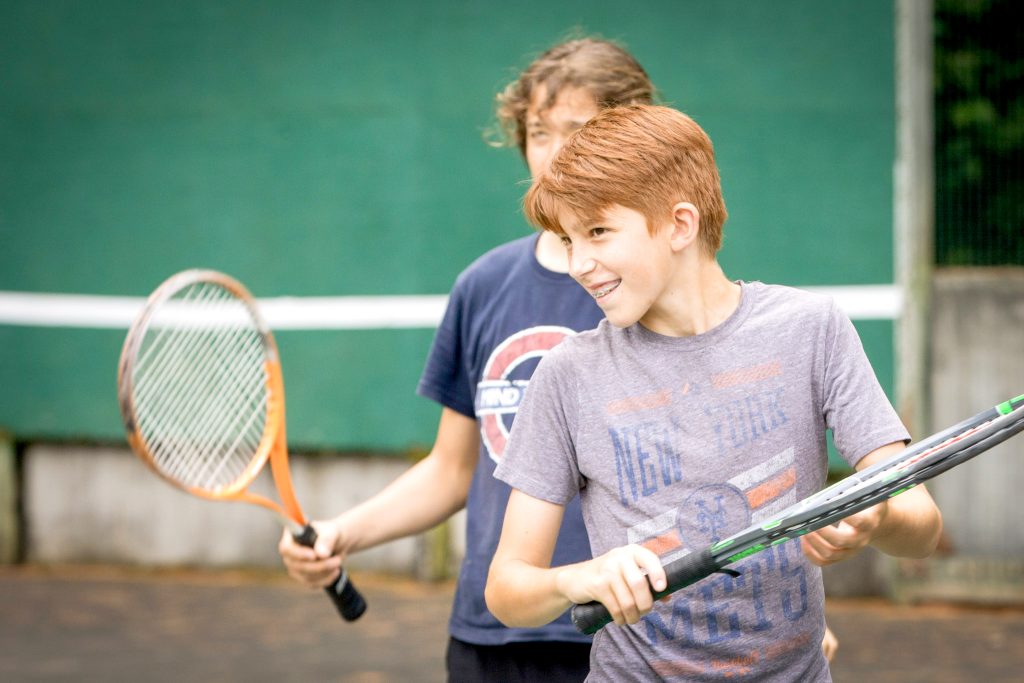
The right summer tennis camp depends on your child’s current skill level and goals, not a single “best” brand name — a beginner needs a recreational, fun-first program, while a competitive junior needs high-volume court time, video analysis, and tournament exposure. Beyond skill level, look closely at the instructor-to-student ratio, whether the camp is day or overnight, and its safety and heat protocols before you commit.
Tennis camps range from casual, one-week clinics to intensive, multi-week training academies, and the differences between them matter more than any single ranking or review. Here’s how to match your child to the right program.
1. Identify the Right Program Type
Tennis camps generally fall into three categories, and matching your child’s experience level to the right one is the most important first step:
- General Skills/Recreational: Best for beginners (ages 5-12). These focus on basic stroke development, hand-eye coordination, and keeping the game fun rather than competitive.
- Tournament Training: For intermediate to advanced players who already compete. These camps focus on match strategy, mental toughness, and structured practice matches.
- High-Performance/College Prep: Aimed at ranked juniors working toward collegiate play. These are high-intensity programs, often featuring several hours of daily court time plus strength and conditioning.
2. Instructor-to-Student Ratio
A low instructor-to-student ratio is one of the clearest signals of program quality. Ask directly how many campers are on a court with each coach — a ratio much above 6:1 for younger or recreational players usually means less individual feedback and less actual hitting time per camper.
3. Day Camp vs. Overnight (Resident)
- Day Camps: Ideal for younger children or those who live nearby. They usually run from morning to mid-afternoon and let your child sleep in their own bed.
- Overnight Camps: Provide a full-immersion experience — beyond tennis, they teach independence and social skills. If your child is 10 or older and ready for the social side of sleepaway camp, an overnight tennis program can be a great fit.
4. Safety and Accreditation
Check whether the camp is accredited by the American Camp Association (ACA). This means the camp has voluntarily undergone a review covering health, safety, and staff screening standards.
- Physical Safety: Tennis in the summer heat is demanding. Ask about hydration protocols and heat-index policies — does the camp move sessions indoors or shorten court time during peak heat?
- Supervision: For overnight camps, ask about the counselor-to-camper ratio in the cabins, not just on the courts.
5. Facility and Surface
Court surface matters more than most parents expect. Hard courts are the most common and closely match what junior tournaments use, while clay courts are gentler on developing joints and encourage longer rallies. Ask how many courts the camp has relative to its enrollment — more courts generally means more hitting time and less waiting between drills.

Tennis Programs at ASC Partner Camps
Several ASC partner camps run structured tennis programs alongside a full slate of other activities, which can be a great option if your child wants strong instruction without a single-sport-only environment. Camp Southwoods offers a dedicated tennis program with daily instruction as part of its broader activity schedule, giving campers the chance to build real skill while still enjoying the traditional overnight camp experience.
Camp Laurel in Maine is home to one of the nation’s premier summer camp tennis programs, offering exceptional instruction for players of every age and skill level. With 15 all-weather courts, experienced coaches—including intercollegiate-level instructors—and a structured curriculum that emphasizes skill development, campers receive personalized attention in a fun, supportive environment. From intensive training and semi-private lessons to tennis ladders, Davis Cup-style match play, tournaments, and intercamp competition, the program challenges experienced players while building confidence in beginners. Whether a camper is picking up a racquet for the first time or refining a competitive game, Camp Laurel’s world-class facilities, expert coaching, and passion for the sport create an outstanding tennis experience.
Frequently Asked Questions
What age should my child start a tennis camp?
Most recreational tennis camps welcome kids as young as 5-6, while tournament-focused and high-performance programs are typically geared toward intermediate-to-advanced players around age 10 and up.
How many hours of tennis per day is appropriate?
For younger or recreational players, 2-3 hours of instruction is plenty. Older, more competitive players in high-performance programs may train 4-6 hours a day, but that level of volume should be paired with rest days and conditioning, not just more court time.
Should my child try a general camp with tennis, or a tennis-only academy?
It depends on your child’s goals. A camp like Camp Southwoods that offers tennis alongside swimming, arts, and other activities is a great fit for a well-rounded summer. A single-sport academy makes more sense for a competitive junior who wants maximum court time and is less interested in other activities.
Find a Camp With a Strong Tennis Program
Whether your child wants a fun introduction to the game or serious, structured training, ASC can help you compare camps with tennis programs that match their level. Use our camp comparison checklist to bring the right questions to your next call with a camp director.
