

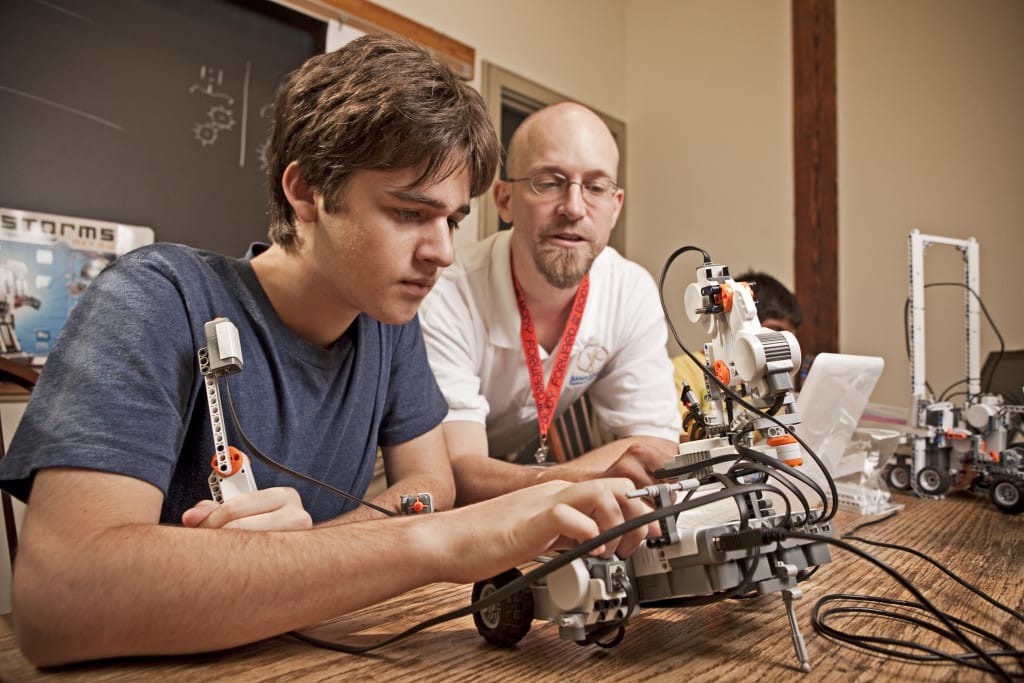
The best STEM summer camps for kids combine hands-on projects — coding, robotics, engineering, game design, or science experimentation — with small-group instruction from staff who actually know the subject matter, not just camp-general counselors running a pre-packaged activity. STEM camps range from single-day workshops at a local museum to full-summer residential programs built entirely around technical skill-building, so the “best” camp depends heavily on your child’s specific interest, skill level, and how immersive an experience you’re looking for.
This guide covers the different types of STEM camps available, what actually makes a program worth the investment, and how to match a camp to your child’s interests.
Types of STEM Summer Camps
Coding and computer science camps teach programming languages, app or game development, and computational thinking — ranging from block-based coding for younger kids to real languages like Python or JavaScript for older, more experienced campers.
Robotics camps have campers design, build, and program physical robots, often culminating in a competition or demonstration day. These camps blend mechanical engineering, electronics, and coding in a single hands-on project.
Engineering and design camps focus on the broader engineering design process — building bridges, catapults, or vehicles, testing and iterating on designs, and applying physics and math concepts to real, physical problems.
Game design camps teach kids to build their own video games, often using platforms like Roblox or Unity, combining coding with creative design and storytelling.
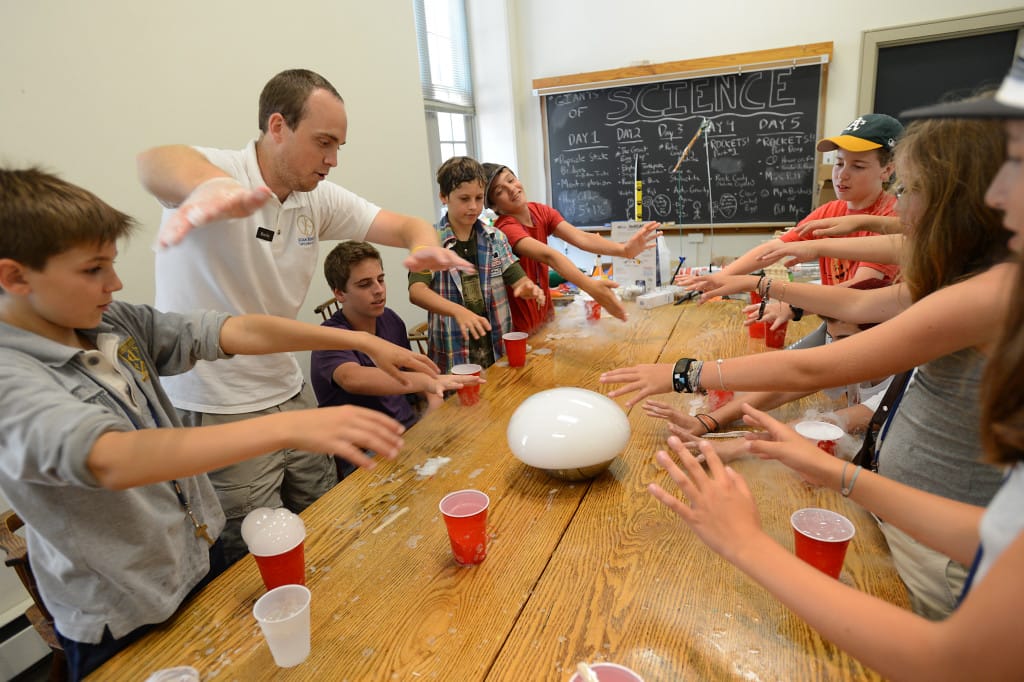
General science/discovery camps cover a broader mix of chemistry, biology, environmental science, and physics experiments — a good entry point for younger kids or those who aren’t sure yet which STEM area interests them most.
STEM-integrated traditional camps are general-interest overnight or day camps that include a dedicated STEM program as one of several activity offerings, letting a camper split time between STEM and traditional camp activities like swimming and sports.

What to Look for in a Quality STEM Camp
Instructor expertise. Ask specifically about instructor backgrounds — camps with staff who have real computer science, engineering, or education backgrounds in the subject tend to deliver a meaningfully deeper experience than camps that hand a generic curriculum to counselors without subject expertise.
Hands-on ratio. Strong STEM programs prioritize hands-on building and coding time over lecture-style instruction. Ask what percentage of a typical day is spent actively building/coding versus watching or listening.
Small group sizes. STEM skills — especially coding and robotics — benefit from individualized troubleshooting help. Ask about camper-to-instructor ratios specifically for the STEM sessions, which are sometimes different from the camp’s general ratio.
Take-home projects or outcomes. The best programs give campers something tangible to show for the week: a working robot, a playable game, a coded app. Ask what a camper typically completes or takes home by the end of a session.
Progressive skill-building. For campers attending multiple summers, ask whether the curriculum builds on previous years rather than repeating the same introductory material.
Balance with traditional camp activities. For families who want their child to experience more than just STEM, a hybrid camp that blends STEM programming with sports, arts, and outdoor time may be a better overall fit than an all-day, all-STEM format. The Complete Guide to Types of Summer Camps breaks down how specialty and traditional camp formats compare more broadly.
Day Camp vs. Overnight STEM Programs
Most STEM-specific camps run as day programs, often through local museums, universities, or dedicated STEM education companies, which makes sense given the need for specialized labs and equipment that’s easier to maintain at a fixed location. Overnight STEM options do exist, and they tend to appeal to older kids and teens who want a more immersive, focused experience — often combining STEM instruction with the broader independence-building benefits of overnight camp covered in Day Camp vs. Overnight Camp.
What Does a STEM Camp Typically Cost?
Day-camp-format STEM programs commonly run in a similar range to other specialty day camps — roughly $300 to $700+ per week — with price driven mainly by instructor expertise, equipment (robotics kits, computers, specialized software licenses), and group size. Highly specialized intensives (advanced robotics competitions, university-affiliated programs) can run higher given the equipment and instructor credentials involved. Overnight STEM programs follow overnight camp’s broader pricing pattern, generally landing in the same range as other specialty overnight camps once lodging and meals are factored in. For a fuller breakdown of what drives camp pricing generally, see How Much Does Summer Camp Cost?
Matching a STEM Camp to Your Child’s Interest Level
If your child has a specific, established interest (they’ve been coding on their own, building with a robotics kit at home, entering science fairs), a specialized single-subject camp will likely hold their attention and stretch their skills the most. If your child is STEM-curious but not yet focused on one area, a broader discovery-style camp — or a traditional camp with a STEM activity option alongside other offerings — is often a better entry point, since it lets them sample multiple areas without committing a full week to one narrow topic.
Free and Lower-Cost STEM Options Worth Knowing About
Not every strong STEM experience requires a specialty camp price tag. Many public libraries, science museums, and university outreach programs run free or low-cost STEM day workshops throughout the summer, and organizations like NASA and various robotics nonprofits offer free curriculum and camp programming in select locations. These can be a good way to gauge a child’s interest before investing in a full-price specialty week, or to supplement a traditional camp summer with a shorter, focused STEM add-on.
Frequently Asked Questions
What age should a child start attending STEM camps?
Most STEM camps offer age-appropriate tracks starting around age 6-7 with block-based coding and simple building projects, scaling up to real programming languages and advanced robotics for pre-teens and teens.
Are STEM camps only day camps, or are there overnight options too?
Most are day camps due to equipment and lab requirements, but overnight STEM-focused options do exist, especially for older kids and teens looking for a more immersive experience.
Do STEM camps require prior coding or robotics experience?
No — most camps offer beginner tracks with no prior experience required, alongside more advanced tracks for returning or experienced campers.
What’s the difference between a coding camp and a robotics camp?
Coding camps focus purely on programming (apps, games, websites), while robotics camps combine coding with mechanical building and electronics to create a physical, functioning robot.
Can my child do a STEM camp and a traditional camp in the same summer?
Absolutely, and many families do exactly this — a STEM day camp for a week or two, plus a traditional day or overnight camp for the rest of the summer, or a hybrid camp that offers both under one roof.
Do STEM camps help with future academic or career interests?
Many parents and educators see STEM camp as valuable early exposure — a low-stakes way for a child to discover whether they enjoy coding, engineering, or a related field well before it becomes an academic or career decision. It’s exploratory, not a formal credential, but the hands-on experience often sparks a lasting interest.
Are STEM camps only for kids who are already good at math and science?
No — most STEM camps are built for curious beginners, not advanced students only. Instructors typically scaffold projects so kids with no prior technical background can still build something real by the end of the session.
Do STEM camps offer options for girls specifically?
Many STEM programs actively recruit and welcome girls, and some run girls-specific sessions or cohorts aimed at closing the gender gap in tech and engineering fields. If representation is a priority for your family, ask a specific camp about their gender balance and whether they offer any girls-focused programming.
How long do most STEM camp sessions run?
Day-format STEM camps commonly run in single-week sessions, letting families mix and match different topics (a week of robotics, a week of game design) across a summer. Overnight and more intensive programs sometimes run two weeks or longer for a deeper dive into one specific area.
Find the Right STEM Program
Whether your child is looking for a deep-dive coding intensive or a broader camp with STEM as one of several activities, comparing programs directly is the best way to find the right fit. Search ASC’s camp directory to explore camp types and activities, or visit our Future Campers hub for more guidance on choosing the right program.
