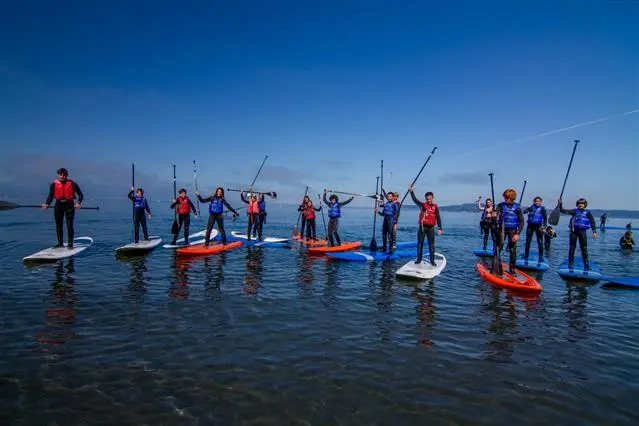
Phones, tablets, video games, and social media are a normal part of life for most kids today. But summer camp offers something increasingly unusual: the opportunity to step away from screens for a while.
At a screen-free summer camp, kids can spend days or weeks focused on the people and experiences directly around them. Instead of checking notifications or scrolling through social media, campers are swimming, playing sports, making crafts, exploring nature, and talking with friends.
A break from technology doesn’t mean screens are inherently bad. Digital media can provide opportunities for learning, entertainment, creativity, and connection. The key is making sure screen time doesn’t replace other important childhood experiences.
Summer camp creates an environment where those offline experiences happen naturally.
A screen-free summer camp gives kids time away from phones and other digital distractions. Without constant access to screens, campers have more opportunities to build friendships, stay active, spend time outdoors, get creative, develop independence, and be present in the moment.
What Is a Screen-Free Summer Camp?
A screen-free summer camp limits campers’ access to personal electronic devices during their stay.
The exact rules vary from camp to camp.
Some sleepaway camps do not allow campers to bring smartphones at all. Others collect devices when campers arrive and return them at the end of the session.
Certain camps may permit basic music players, cameras, or e-readers while restricting phones, tablets, smartwatches, and gaming devices.
Whatever the specific policy, the goal is usually similar: help campers participate fully in camp life without constant digital distractions.
At home, putting away a phone may still leave a child wondering what friends are doing online. Camp creates a different environment.
Everyone is participating together.
That makes disconnecting feel less like missing out and more like becoming part of something new.
Why Is Taking a Break From Screens Good for Kids?
Healthy technology use isn’t simply about counting minutes spent in front of a screen.
The American Academy of Pediatrics emphasizes the importance of protecting time for healthy activities such as sleep, physical activity, play, reading, hobbies, and time outdoors.
That’s one reason summer camp can be such a valuable experience.
Camp doesn’t simply remove a phone from a child’s hands. It fills that time with other experiences.
A typical day might include swimming, hiking, sports, arts and crafts, meals with friends, games, evening activities, and plenty of walking between them.
Instead of telling kids to find something besides a screen to do, camp gives them hundreds of alternatives.
Here are seven of the biggest benefits.
1. Kids Build Stronger Face-to-Face Friendships
Friendship is one of the biggest parts of the summer camp experience.
At camp, kids spend an enormous amount of time together.
They eat meals together. They participate in activities together. They share cabins, compete on teams, sit around campfires, and experience camp traditions together.
Without phones constantly competing for their attention, campers have more opportunities for real conversations.
That can help children practice important social skills such as listening, cooperating, resolving disagreements, and including others.
The American Camp Association also identifies face-to-face friendship skills as one of the potential benefits of getting kids away from screens at camp.
For some campers, these interactions lead to friendships that continue long after summer ends.
2. Campers Can Be More Present in the Moment
A phone can pull someone’s attention in several directions at once.
Even when children aren’t actively using their phones, notifications and messages can create the temptation to check what’s happening elsewhere.
Screen-free camp removes much of that distraction.
When campers are at the waterfront, they can focus on swimming.
When they’re sitting around a campfire, they can listen to the story being told.
When they’re playing a game with friends, they can concentrate on the people standing beside them.
Camp gives kids permission to stop worrying about what might be happening somewhere else.
Instead, they get to experience what’s happening right now.
3. Kids Spend More Time Being Physically Active
One of the easiest ways to spend less time sitting in front of a screen is to have something exciting to do instead.
Summer camp provides plenty of options.
Depending on the camp, children might spend their days:
- Swimming
- Hiking
- Playing basketball, soccer, tennis, or other sports
- Canoeing or kayaking
- Climbing
- Dancing
- Horseback riding
- Trying ropes courses
- Walking around camp with friends
- Participating in all-camp games
Not every camper needs to become an athlete.
The benefit is simply that movement becomes a normal part of the day.
Current American Academy of Pediatrics guidance encourages families to make space for activities such as sports, art, music, volunteering, and outdoor movement alongside digital media.
At camp, many of those opportunities are built directly into the schedule.
4. Screen-Free Time Encourages Creativity
A screen can provide instant entertainment.
Without one, kids sometimes have to invent the entertainment themselves.
That can be a very good thing.
Campers might create inside jokes with their cabin, invent games during downtime, write songs, perform skits, paint, build projects, or tell stories around a campfire.
Many camps also offer structured creative activities such as:
- Arts and crafts
- Ceramics
- Woodworking
- Music
- Photography
- Theater
- Dance
- Jewelry making
- Creative writing
Screen-free time creates more opportunities for kids to become active participants instead of passive consumers.
Sometimes boredom even plays a role.
A few quiet minutes can encourage children to explore, imagine, talk with a friend, or come up with something new to do.
5. Campers Spend More Time Outdoors
For many kids, summer camp provides much more outdoor time than they usually experience at home.
Campers may spend hours swimming in lakes, walking wooded trails, playing games on fields, paddling boats, or sitting around campfires.
They might watch a sunset without photographing it.
They might lie under the stars without checking a notification.
They might discover that they love hiking, sailing, fishing, climbing, or simply sitting beside a lake with friends.
The American Camp Association has also highlighted appreciation for nature and outdoor recreation as an important benefit of unplugging at camp.
Kids aren’t just told to spend less time online.
They’re given an entire outdoor environment to explore instead.
6. Screen-Free Camp Can Support Healthier Sleep Habits
Anyone who has tried convincing a teenager to put their phone down at bedtime knows how difficult it can be.
Phones make it easy to keep scrolling, texting, watching videos, or playing games long after someone intended to fall asleep.
The American Academy of Pediatrics recommends protecting sleep by avoiding screens before bedtime and keeping devices out of bedrooms when possible.
Most screen-free sleepaway camps make that much easier.
There isn’t a smartphone sitting beside a camper’s pillow.
Instead, evenings typically end with cabin activities, conversations, campfires, or other programs before campers return to their bunks.
Camp schedules also tend to be busy.
After a full day of swimming, hiking, sports, activities, and walking around camp, campers usually have plenty of reasons to be tired when lights go out.
Of course, camp isn’t guaranteed to solve every child’s sleep habits.
But it creates an environment where late-night scrolling simply isn’t part of the routine.
7. Kids Learn They Can Have Fun Without Their Phones
Perhaps the most important benefit of a screen-free summer camp is also the simplest.
Kids discover they don’t need a phone to have fun.
A ridiculous camp game can bring out their competitive side.
Learning to waterski can become a memorable challenge.
The art studio gives campers a chance to make something of their own.
At dinner, singing loudly with friends can feel completely natural.
Around a campfire, stories and laughter can fill the evening.
An entire day can pass without thinking about likes, views, streaks, notifications, or what everyone else is doing.
For a child who spends a significant amount of free time using technology at home, that can be a powerful realization.
The goal isn’t necessarily for campers to return home and abandon technology altogether.
Instead, camp can remind them that their phones are only one part of life.
There is a lot happening beyond the screen.
What If My Child Doesn’t Want to Give Up Their Phone at Camp?
Don’t be surprised if your child isn’t thrilled about the idea at first.
Older campers and teenagers may be particularly attached to their phones.
Their devices aren’t just entertainment. They’re also how they communicate with friends, listen to music, take pictures, and keep up with what’s happening socially.
Suddenly giving that up can feel uncomfortable.
That’s normal.
But camp has an important advantage over trying to enforce a phone-free afternoon at home.
Camp replaces the phone with something else.
Campers aren’t sitting in an empty room being told not to use technology.
They’re surrounded by other kids who are also without their phones. Their days are filled with activities, meals, special events, traditions, and time with friends.
The first few device-free days may feel unusual.
Once campers become absorbed in camp life, however, many discover that they don’t miss their phones as much as expected.
Are All Summer Camps Screen-Free?
No.
Every camp establishes its own technology policy.
Many traditional sleepaway camps heavily restrict personal devices, but the rules can vary considerably.
That’s why parents should ask about technology when they’re learning how to choose the right summer camp.
Questions worth asking include:
- Are campers allowed to bring smartphones?
- Are phones collected when campers arrive?
- Are smartwatches allowed?
- Can campers bring cameras or music players?
- Are e-readers permitted?
- How do parents communicate with campers?
- Can families send emails?
- Does the camp upload photos for parents?
- How does the camp contact parents during an emergency?
You can also include technology policies among the questions you ask a summer camp director before enrolling your child.
Knowing the rules beforehand helps both parents and campers prepare for the experience.
How Can Parents Prepare Kids for a Screen-Free Summer Camp?
It can help to start talking about the camp’s phone policy before packing day.
Explain what your child will be doing rather than focusing only on what they’ll be giving up.
Talk about the waterfront, sports, cabin friends, activities, campfires, special events, or anything else they’re excited to experience.
You can also practice occasional device-free periods at home.
Try putting phones away during dinner, an afternoon activity, a family outing, or before bedtime.
That doesn’t need to become a battle over technology.
The goal is simply to help kids become more comfortable being disconnected for a while.
Parents should also make sure children know how communication works at their camp.
Understanding when they can write letters, send emails, or talk with family can make arriving without a phone feel less intimidating.
Screen-Free Summer Camp Is About What Kids Gain
It’s easy to describe a screen-free summer as something being taken away.
No phones, no social media, no video games.
But that’s only half the story.
Summer camp replaces that screen time with experiences.
Kids gain more opportunities to talk face-to-face, spend time outdoors, move their bodies, create things, try new activities, solve problems, and become part of a community.
They get to experience life without constantly documenting it.
And for a few days or weeks, their attention gets to stay right where they are.
That’s one of the many reasons summer camp can be such a valuable experience for kids.
Ready to explore camp options? Find a summer camp where your child can unplug, meet new friends, and make the most of their summer.
Frequently Asked Questions
Are phones allowed at summer camp?Policies vary by camp. Many sleepaway camps prohibit or collect smartphones so campers can participate fully in camp life. Always check the camp’s electronics policy before arrival.
Why do summer camps ban phones?Many camps limit phones to encourage face-to-face friendships, participation in activities, independence, outdoor exploration, and stronger camp communities.
Is a screen-free summer good for kids?Screen-free time can create more opportunities for sleep, physical activity, creative play, outdoor experiences, and in-person relationships. The goal is balance rather than eliminating technology completely.
What do kids do without phones at summer camp?Campers may spend their days swimming, playing sports, boating, creating art, hiking, attending special events, enjoying campfires, and spending time with friends.
Will my child miss their phone at sleepaway camp?Some campers miss their phones at first. Busy schedules, activities, friendships, and camp traditions often make the adjustment easier once camp begins.
How do parents communicate with children at phone-free camps?Every camp is different. Communication may include letters, emails, parent portals, scheduled calls, or other systems. Camps contact parents directly when necessary.