

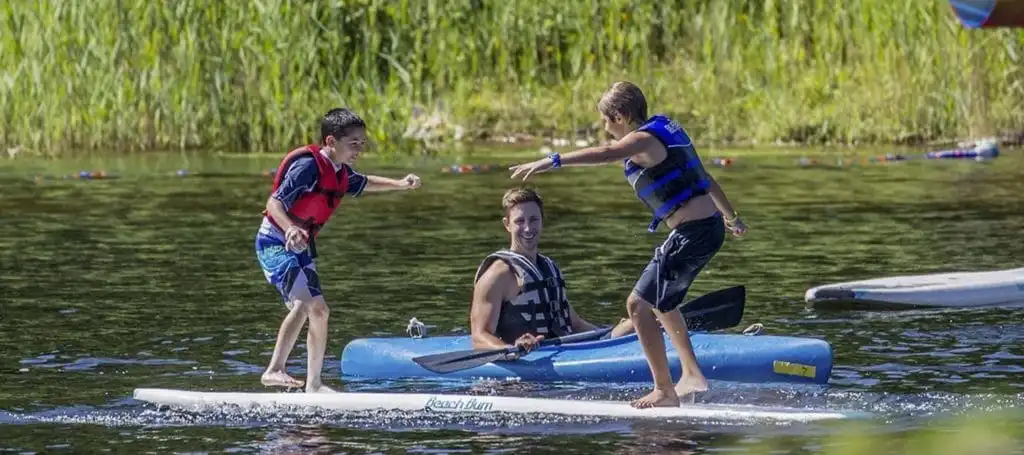
How long kids should go to summer camp depends on their age, independence, previous experience away from home, and enthusiasm for camp. Shorter 1–2 week sessions can work well for some first-time campers, while 3–4 weeks gives children more time to settle in, build friendships, and fully experience camp life.
Choosing the right summer camp is a big decision. Once you find a camp that feels like a good fit, another question usually follows: “how long should my kids go to summer camp?“
There is no single session length that works for every child. Some campers thrive during a short introduction to sleepaway camp. Others are ready to spend several weeks away from home and become fully immersed in camp life.
The best choice depends on your child’s age, maturity, comfort away from home, and excitement about attending camp. Your family’s schedule and budget also play a role.
Below, we’ll break down common summer camp session lengths and help you decide which option may work best for your child.
How Long Does Summer Camp Usually Last?
Summer camp sessions vary widely. Some overnight camps offer one-week sessions, while traditional sleepaway camps may run for six, seven, or even eight weeks.
Common session lengths include:
- One week
- Two weeks
- Three to four weeks
- Six to eight weeks, or a full summer
Many camps offer more than one option. For example, a camp may have several two-week sessions alongside a longer four-week or full-summer program.
There is no “correct” amount of time to attend. Instead, families should consider what gives their child enough time to feel comfortable, enjoy camp, and gain confidence without pushing them beyond what they are ready for.
How Long Should a First-Time Camper Stay?
First-time campers often need a little extra consideration.
For some children, a one- or two-week session can be an approachable introduction to overnight camp. It gives them a chance to experience cabin life, camp activities, and time away from home without committing to most of the summer.
However, shorter is not always easier.
The first few days of camp often involve adjustment. Campers are learning names, getting used to their cabin, finding their way around camp, and settling into a new routine. A child attending for only one week may feel like camp is ending just as they begin to feel comfortable.
Because of this, many families find that a two- or three-week session provides a useful balance. Children have time to adjust while still knowing they will be home within a relatively short period.
More confident first-time campers may also be ready for longer sessions. If your child is excited about camp, has successfully spent nights away from home, and adapts well to new environments, three or four weeks may be a great fit.
Ultimately, camp readiness matters more than choosing a specific number of weeks.
Choosing the Right Summer Camp Session Length
Each camp session length offers a different experience. Understanding those differences can help you decide what feels right for your family.
One-Week Summer Camp Sessions
A one-week session can be a good introduction for younger campers or children who are hesitant about staying away from home.
It may also work well for families fitting camp around vacations, sports, or other summer commitments.
During a one-week session, campers can still participate in traditional activities, meet new friends, and experience cabin life. However, the shorter timeframe means there is less time to settle into the camp community.
For children who need several days to adjust, the session may feel like it ends just as they become comfortable.
One week can be a good starting point, but it is worth asking the camp how its shorter sessions are structured. Some camps design one-week programs specifically for first-time campers, which can make the transition much smoother.
Two-Week Summer Camp Sessions
Two weeks is a popular option because it gives campers more time to settle in without requiring a long commitment.
During a two-week session, children usually have time to move past the initial adjustment period and develop a real routine. They may form stronger friendships, become more comfortable with their counselors, and explore more activities.
Two weeks can also be a good option for first-time campers who are excited about camp but are not quite ready for a month away from home.
For many families, this length offers a comfortable middle ground.
Three- to Four-Week Summer Camp Sessions
For children who are ready for a more immersive sleepaway camp experience, three to four weeks can be an excellent choice.
Longer sessions give campers time to become part of the camp community rather than simply visit it. Friendships have more time to develop, campers can progress in activities, and daily routines start to feel familiar.
This extra time can also support independence.
Children learn how to manage their belongings, communicate with counselors, solve everyday problems, and navigate friendships without relying on parents for immediate help.
A three- or four-week session may be especially appealing for returning campers or confident first-time campers who already enjoy spending time away from home.
Six- to Eight-Week or Full-Summer Camp
Traditional full-summer camp programs often last six to eight weeks.
These sessions create a deeply immersive experience. Campers spend much of their summer with the same friends and counselors, which can lead to especially strong relationships and a close sense of community.
Longer sessions also give children more time to improve skills. A camper might progress in waterskiing, horseback riding, sailing, tennis, arts, or other activities over several weeks.
Full-summer programs are generally best suited to campers who are comfortable away from home and genuinely excited about the experience.
For children who already love camp, a longer session may not feel long at all. In fact, many returning campers spend the school year counting down the days until they can go back.
What Should Parents Consider When Choosing a Session Length?
There is more to consider than your child’s age. Two children of the same age can have very different levels of independence and comfort away from home.
Your Child’s Maturity
Think about how your child handles everyday responsibilities.
Can they get dressed, keep track of their belongings, communicate when they need help, and follow a routine without constant reminders?
Camp counselors are there to support campers, but basic independence can make the transition much easier.
Previous Time Away From Home
Children who have successfully attended sleepovers, stayed with grandparents, or traveled without their parents may already be comfortable spending nights away.
If your child has rarely slept away from home, camp will be a bigger adjustment. That does not mean they are not ready, but it may influence which session length you choose.
Their Excitement About Camp
Your child’s opinion matters.
A camper who is enthusiastic about going away for several weeks may adjust more easily than a child who feels pressured into attending.
Talk with your child about what camp will actually be like. Look at photos, explore activities, and discuss cabin life together.
The goal is to create realistic excitement rather than simply convincing them that camp will be fun.
How They Handle New Situations
Some children jump into new environments quickly. Others need several days before they feel comfortable.
If your child usually takes time to warm up, a slightly longer session may actually work better than a very short one. It gives them time to move beyond the adjustment period and enjoy the experience.
Your Family’s Summer Schedule
Camp also needs to fit around family vacations, sports, academic programs, and other summer plans.
Fortunately, many camps offer multiple session lengths. Families can often find an option that works without giving up the rest of their summer plans.
Your Budget
Longer camp sessions generally cost more, so budget is naturally part of the decision.
Rather than assuming the longest session is automatically best, consider the experience your child is ready for and what makes sense for your family.
A well-matched two-week session can be far more valuable than a longer stay that your child was not prepared for.
What About Homesickness?
Homesickness is one of the most common concerns parents have about sleepaway camp.
It is also completely normal for campers to miss home, especially during the first few days.
However, homesickness does not necessarily mean camp is going badly.
Campers are adjusting to a new place, new people, and a new routine all at once. With support from counselors and plenty of activities, many children begin to feel comfortable once they settle in.
This is also why choosing the shortest possible session is not always the best strategy. If a child needs four or five days to adjust, a one-week program may end before they have a chance to fully enjoy the experience.
Before camp begins, talk positively about what your child can do if they miss home. Encourage them to speak with their counselor and remind them that feeling homesick does not mean they have to leave.
It can also help to avoid making promises such as, “If you don’t like it, we’ll come pick you up.” That can make it harder for a child to work through normal moments of uncertainty.
How Long Should International Campers Attend Summer Camp?
International campers have a few additional factors to consider when choosing a session length.
Travel to the United States can involve long flights, time-zone changes, and a completely new cultural environment. Because of that, a very short camp session may feel rushed.
A longer stay gives international campers time to adjust to their surroundings and fully experience American summer camp culture.
For many international families, two weeks may be a practical minimum, while three to four weeks can provide a more immersive experience.
During a longer session, campers have more time to make friends, become confident speaking English, participate in traditions, and feel like part of the camp community.
Families should also check individual camp requirements. Some camps have minimum session lengths for international campers or structure specific sessions around international arrivals.
So, How Many Weeks of Summer Camp Is Best?
For many children, two to four weeks offers a strong balance.
That amount of time gives campers an opportunity to adjust, make meaningful friendships, develop independence, and enjoy a wide range of activities.
However, there is no universal answer.
A one-week introductory session may be perfect for one child. Another first-time camper may happily attend for four weeks. Experienced campers often love spending six, seven, or eight weeks at camp.
The most important thing is choosing a session that matches your child’s readiness.
Look at their independence, previous experience away from home, enthusiasm for camp, and ability to adapt to new environments. Then speak with the camp director if you are unsure. They can often recommend a session based on your child’s age and experience.
When children attend camp for the right amount of time, they have the opportunity to build friendships, gain confidence, try new things, and create the kinds of summer memories that can stay with them for years.
Frequently Asked Questions About Summer Camp Session Length
Overnight summer camp sessions can last anywhere from one week to most of the summer. Common options include one-week, two-week, three- to four-week, and six- to eight-week sessions.
It can be. One-week sessions can work well for younger or hesitant first-time campers. However, some children need several days simply to adjust, which can make a longer session more rewarding.
Not necessarily. Two weeks is a common choice for first-time campers because it provides enough time to settle in without requiring a long commitment.
Age is only one factor. Independence, comfort away from home, maturity, and enthusiasm for camp are just as important. Younger first-time campers may prefer shorter sessions, while confident children may be ready for several weeks.
For a child who is ready, four weeks can provide a deeper camp experience. Campers have more time to build friendships, improve activity skills, develop independence, and become part of the camp community.
Two to four weeks is often a good range for international campers. A longer stay allows more time to adjust after travel, experience American camp culture, and develop meaningful friendships.
Not necessarily. Each child may have a different level of readiness. One sibling may feel comfortable attending for four weeks while another would benefit from starting with a shorter session.
Find the Right Summer Camp for Your Child
The right session length is only one part of choosing a great summer camp.
Every camp has its own traditions, activities, community, and program structure. Finding a camp that fits your child’s personality and interests can make the transition away from home much easier.
American Summer Camps can help your family explore camps across the United States and find an experience that feels right for your child.
