

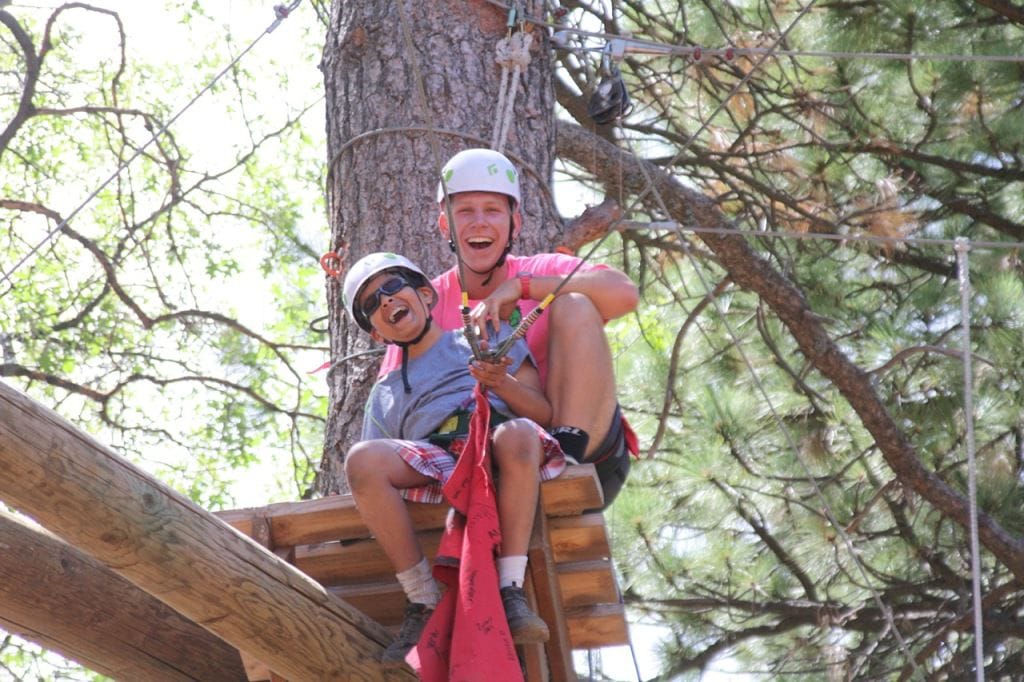
Outdoor adventure is one of the fastest-growing areas at camp, and one of the few roles where the split between male and female applicants is close to even, which still leaves camps short of the outdoorsy, hands-on staff they actually need. If you’ve spent real time outside, this may be the most natural fit on this list.
What the job actually involves
Outdoor adventure counselors run the activities that get campers off the main camp grounds: ropes and challenge courses, climbing walls or outdoor climbing, backpacking and overnight wilderness trips, mountain biking, and archery, depending on the camp’s program. Some camps run this as a standalone specialty area; others build entire multi-day trips where an adventure counselor leads a small group off-site for several nights. Either way, you’re teaching real outdoor skills and managing real risk, not just supervising free time.
The certifications and background that matter
- ACCT certification (Association for Challenge Course Technology) is the standard credential for running a ropes or challenge course, and camps that run one will usually want it or help you get it.
- Wilderness First Aid (WFA) or Wilderness First Responder (WFR) matters if you’re leading overnight or backcountry trips, since you’re further from normal medical support than a counselor on main camp.
- Leave No Trace training is common for trip-leading roles and shows you know how to run a backcountry trip responsibly.
Real outdoor experience counts for a lot here too: time with Scouts, a college outdoor recreation program, NOLS or Outward Bound, or just serious personal experience hiking, climbing, or backpacking. Camps read that background as seriously as a formal certification.
What a multi-day trip actually looks like
At camps that run backcountry trips, a typical trip is three to seven days, led by two or more staff, covering a set route that’s been scouted and approved ahead of time. You’re responsible for navigation, pacing the group, cooking and camp setup each night, and reading how campers are handling the physical and mental demands of being off-grid. Camps that run trips like this have clear check-in protocols and emergency plans, so you’re never actually as far from support as it might feel on the trail. It’s real responsibility, but it’s structured, not improvised.
Who this is right for
This role fits outdoor recreation and parks and rec majors, Eagle Scouts, and anyone who’s spent real time climbing, hiking, or backpacking on their own. If you’d rather be leading a group up a trail than sitting in a classroom internship this summer, this is likely your role. It’s a lighter fit if you don’t have much hands-on outdoor background yet, since risk management is a real part of the job and camps weigh experience heavily here.
Frequently Asked Questions
Not always. Some camps will train and certify a strong candidate who has the right outdoor background but not yet the formal credential (ACCT, WFA). Either way, spell out your actual experience level in your application.
Adventure staff typically run the specific activities (ropes, climbing, trips), while a broader outdoor-education counselor may also teach nature skills, orienteering, or environmental education. Some camps combine both under one role.
No. Outdoor adventure is land-based. If lifeguarding, swim instruction, or boating is more your background, see How to Become a Camp Lifeguard or Waterfront Counselor instead.
No. Overnight and backcountry trips are always staffed with more than one counselor, and camps set clear supervision and communication protocols for any off-site trip.
That’s fine. Say exactly what you’ve done and at what level. Camps often build their adventure staff out of people with different specialties (one strong climber, one strong backpacker, one strong ropes-course instructor) rather than expecting every applicant to do everything.
How to get started
Check ASC’s job search and the outdoor adventure job listings for current openings, and lead your application with your specific outdoor background, whether that’s Scouts, a college program, or your own trip experience. Change lives, including your own: leading a kid’s first backpacking trip or their first time off the ground on a ropes course is the kind of summer that sticks with both of you.
