

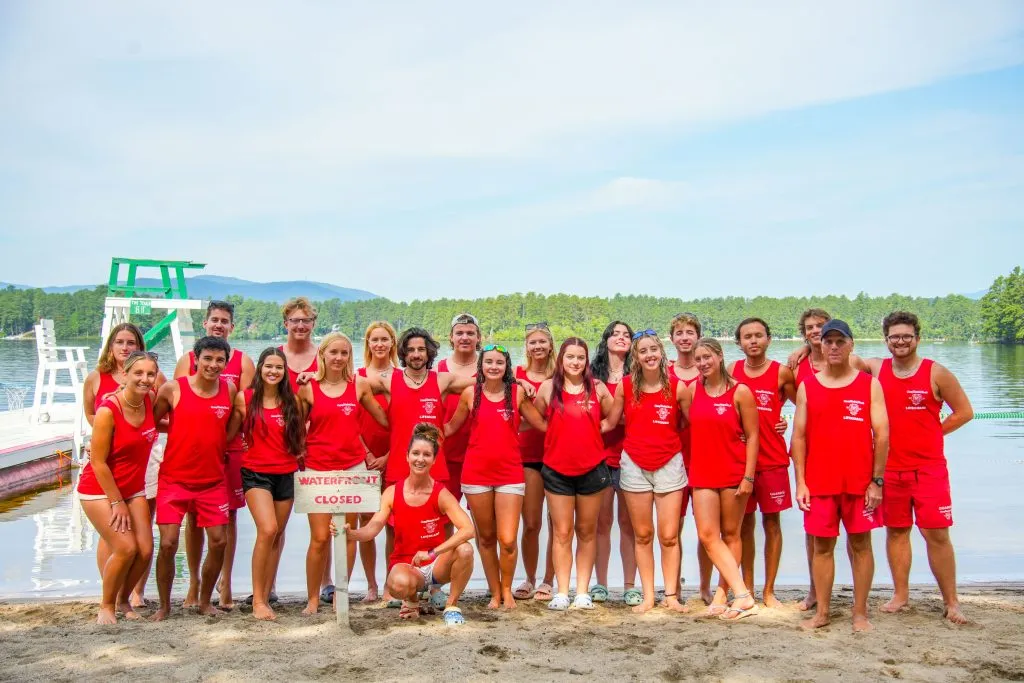
Lifeguards are one of the hardest positions for camps, pools, and waterfronts everywhere to fill, not just at camp. If you’re already certified, or willing to get certified before summer, a camp waterfront job is one of the fastest paths to a job offer of any role on this list.
What the job actually involves
Waterfront staff supervise swim periods, run swim instruction for campers learning to swim, and keep the whole waterfront area (lake, pool, or ocean-front, depending on the camp) safe throughout the day. Depending on the camp, waterfront roles can also include teaching sailing, canoeing, kayaking, or paddleboarding, or driving a safety boat. Most camps run a rotating watch schedule so no one lifeguard is on duty every period, but you’re expected to be alert and ready the whole time you’re on.
The certifications that get you hired
- Lifeguard certification (American Lifeguard Association or American Red Cross) is the baseline for any waterfront role. If you don’t have it yet, most certifying bodies run courses through the spring, well before camps start hiring in earnest.
- Water Safety Instructor (WSI) certification, also through the Red Cross, is what qualifies you to actually teach swim lessons, not just supervise. If a camp has to choose between an applicant with just a lifeguard cert and one with WSI too, WSI usually wins.
- Small-craft certifications (sailing, canoeing, or a boating license) matter if you want to run boating instruction specifically, on top of or instead of swim supervision.
You don’t need every certification above to apply. A current lifeguard cert alone is enough to be a strong candidate; stacking WSI or a small-craft cert on top makes you a stronger one.
Why this is the fast lane
Waterfront and lifeguard roles skew female across the camp industry, which means a certified male applicant stands out immediately. Combine that with the nationwide lifeguard shortage that’s affected pools and beaches for years, and camps are often more eager to fill this role than any other on staff. If you’re weighing a few different camp job options, and you already hold a lifeguard certification, this is usually the one that gets you an offer fastest.
Getting certified before summer
If you’re not certified yet, start with a Lifeguard certification course through the American Red Cross or American Lifeguard Association. Courses typically run over a weekend or a few evenings, usually cost under a couple hundred dollars, and are widely available at YMCAs, community pools, and Red Cross training centers starting in the winter. Certification is valid for about two years, so getting it done over winter break or early spring gives you plenty of runway before camps start their main hiring push in February and March. If swim instruction interests you too, WSI courses run on a similar schedule and are usually a separate, slightly longer course on top of the base lifeguard certification.
Who this is right for
This role fits current lifeguards, competitive or club swimmers, and anyone on a sailing, rowing, or crew team. It’s also worth it if you don’t have a certification yet but are willing to get one: the time and cost of a lifeguard course is small compared to how much it opens up. It’s not the right fit if you’re not a strong swimmer yourself, since the certification process itself has real swim-test requirements.
Frequently Asked Questions
No, but it helps. Some camps will sponsor or cover certification for a strong candidate who commits early. If you’re not certified yet, say so in your application and mention you’re willing to get certified before the season.
Not exactly. Lifeguarding is supervision and rescue readiness; swim instruction (teaching kids to swim) requires WSI specifically. Many waterfront counselors do both.
Small-craft roles, like sailing or canoeing instruction, are usually a separate track from lifeguarding, though some camps combine them. Ask the specific camp what their waterfront program covers.
Yes. Waterfront jobs are lake, pool, or ocean-based. If backpacking, climbing, or land-based wilderness activities are more your speed, see Outdoor Adventure Counselor Jobs at Summer Camp.
Yes, most Lifeguard and WSI certifications are valid for about two years, so check your expiration date before you apply. If it’s expired or close to it, plan on recertifying, which is usually a shorter course than the original certification.
How to get started
Check ASC’s job search for current waterfront and lifeguard openings, and lead your application with whatever certifications you already hold. If you need to get certified first, most Red Cross and American Lifeguard Association courses run through the spring, in plenty of time for summer hiring. Adventure awaits, and for a lot of camps, it starts at the waterfront.
