

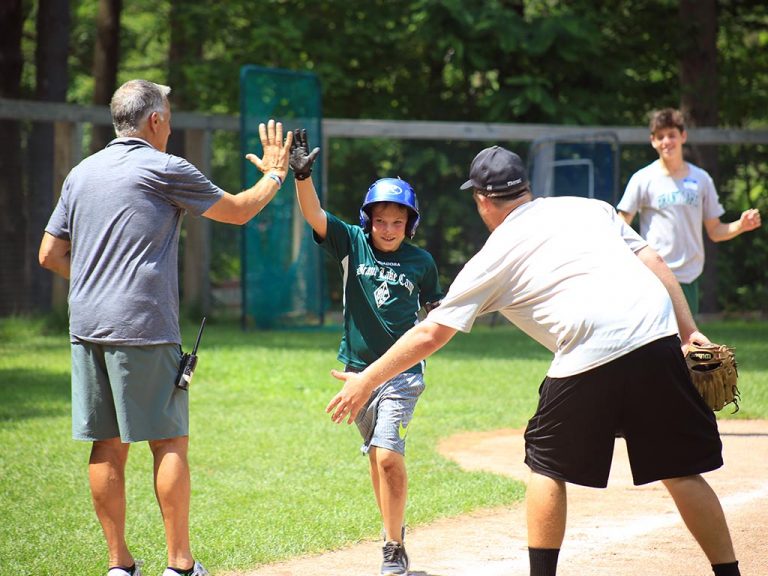
Camp coaching and sports instructor jobs are some of the most requested roles by camps every season, and they’re consistently short on strong applicants. If you played a sport in high school or college, coached at any level, or you’re studying kinesiology, PE, or sports management, this is likely the fastest, most natural way into a camp job.
What the job actually involves
A camp sports counselor runs one or more sport programs for the summer: basketball, soccer, baseball, lacrosse, tennis, and more, depending on the camp. Your day usually splits between coaching age-group practices and clinics, running instructional periods for kids learning the sport for the first time, and often coaching an inter-camp or league team. Most sports counselors also live in a cabin and take on general counselor duties (supervision, meals, evening activities) alongside their coaching hours.
Do you need a coaching certification?
Usually not. Most camps care most about whether you can run a practice, keep a group of kids engaged, and teach fundamentals patiently at every skill level, not whether you hold a formal coaching license. Real playing experience through high school, club, or college is the strongest thing on your application. CPR and First Aid certification helps for any role working directly with kids, and some specialty sports (goalkeeping, tennis, golf) may look for coaching-specific credentials, but check the individual camp’s listing rather than assuming you need one.
Best summer jobs for college athletes
If you’re a current college athlete, camp coaching solves a real problem: staying active, coaching-adjacent, and building real leadership hours over the summer, instead of a break from your sport entirely or a generic retail job. You’re running practices, correcting technique, and managing a group, the same skills that translate directly if you’re eyeing coaching, teaching, or athletic training as a career. It also keeps you sharp in your sport during the off-season in a way that sitting behind a desk doesn’t.
What a typical day looks like
Mornings usually start with a general activity period before the coaching schedule kicks in: two or three periods running age-group practices or clinics in your sport, broken up by lunch, rest hour, and general counselor duties. Afternoons often bring a league game or inter-camp scrimmage, and evenings rotate between cabin time and all-camp activities. You’re not coaching every hour of the day. Most camps split your schedule between your sport and general counselor responsibilities, so you’re also eating meals with your cabin, running evening activities, and getting to know your campers outside of practice.
Who this is right for
This role fits former or current athletes, PE and kinesiology majors, aspiring coaches, and anyone who’s spent real hours running drills or leading a team. It’s a strong option whether you’re aiming at a coaching career or just want a summer that keeps you active and outside. It’s less of a fit if you don’t have hands-on experience in the sport you’d want to coach: camps will place you where your actual playing or coaching background is strongest.
Frequently Asked Questions
Most traditional camps run programs across basketball, soccer, baseball, softball, lacrosse, tennis, volleyball, and general athletics. Specialty sports camps may hire specifically for golf, hockey, gymnastics, or other single-sport focuses.
Often, yes. Many camps are glad to have a counselor who can run more than one sport program, especially at smaller camps where staff cover multiple roles.
Yes. Coaching and athletics roles are land-based sport instruction. If swimming, boating, or water safety is more your background, see How to Become a Camp Lifeguard or Waterfront Counselor.
Most sports counselors also take on general counselor duties: living in a cabin, supervising campers, and helping run the daily schedule outside of your coaching periods. See Qualifications and Requirements for Landing a Summer Camp Job for what camps look for across every role.
Specificity. “I played varsity soccer for four years and coached a U10 club team last spring” tells a camp far more than “I’m good at sports and love working with kids.” Name the sport, your level, and any coaching or refereeing you’ve already done, even informally.
How to Get Started
Check ASC’s job search for current coaching and athletics openings, and be specific in your application about which sports you’ve played or coached and at what level. That detail is what gets a coaching application noticed. Best! Job! Ever! isn’t just a tagline here: coaching kids in the sport you love, outside, all summer, is a genuinely good way to spend three months.
