

Summer camps handle food and nutrition by working with on-site dining staff or nutritionists to serve balanced meals, accommodate common allergies like nuts, dairy, soy, gluten, and shellfish, and offer alternatives for picky eaters — while increasingly paying closer attention to ingredient quality, including artificial food dyes and the types of cooking oil used in the kitchen. Parents evaluating a camp’s food program should ask directly about allergy protocols, menu variety, and how the kitchen handles substitutions.
How Do Camps Handle Food Allergies?
Most camps require parents to disclose allergies during enrollment and health-form submission, and well-run programs cross-reference that information with kitchen staff before the season starts. The most common allergens camps plan around are:
- Tree nuts and peanuts: Many camps designate nut-free dining halls or nut-free tables, and some go fully nut-free campus-wide.
- Dairy: Kitchens typically stock non-dairy milk alternatives and can substitute in most recipes.
- Soy: Less commonly flagged, but camps with strong allergy protocols screen for it in packaged and processed foods.
- Gluten: Gluten-free bread, pasta, and baked goods are increasingly standard at camps with dedicated dining staff.
- Shellfish: Typically avoided in shared prep areas or clearly labeled when served, since cross-contact is a common concern.
When touring or researching a camp, ask specifically how they prevent cross-contact in food prep, whether they can accommodate a written allergy action plan, and whether an EpiPen-trained staff member is present at every meal.
What About Food Dyes and Ingredient Quality?
Artificial food dyes have become a bigger topic in recent years as more parents ask about ingredient sourcing, and camps are responding. Some dyes commonly found in processed snacks and drinks have been linked in various studies to hyperactivity in sensitive children, and a growing number of camp kitchens are shifting toward naturally colored or dye-free versions of popular snacks, particularly for younger campers. If ingredient quality matters to your family, ask a camp directly whether their kitchen sources dye-free snacks and what cooking oils they use — many kitchens have moved away from heavily processed seed oils toward options like canola or olive oil for cooking, though practices vary widely by camp and by budget.
How Do Camps Handle Picky Eaters?
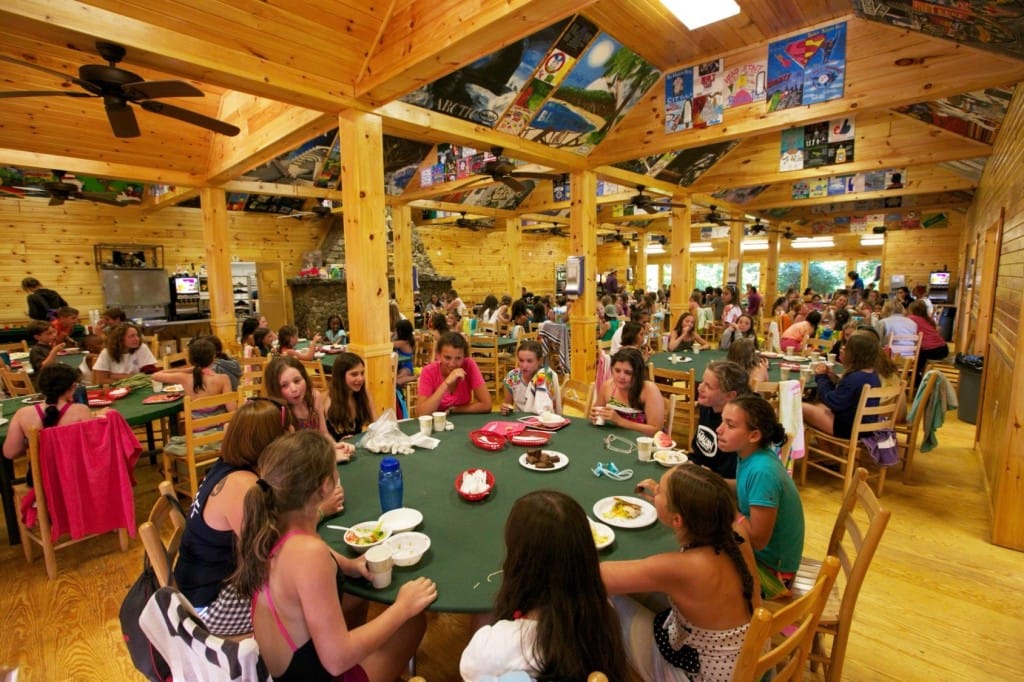
Camp dining halls are usually built around variety rather than a single set menu, which helps naturally with picky eating. Most camps offer a rotating main menu alongside standing alternatives — a salad bar, sandwich station, or simple staples like pasta and rice — so campers who are hesitant about a specific dish still have options at every meal. Counselors are also generally trained to encourage (not force) trying new foods, and mealtimes are treated as a social, low-pressure part of the day rather than a battleground.
Questions to Ask a Camp About Food and Nutrition
- How do you accommodate common allergies, and what’s your cross-contact protocol?
- Is a written allergy action plan honored, and is staff trained on EpiPen use?
- What alternatives are available for picky eaters at every meal?
- Do you use any dye-free or lower-processed ingredient options?
- Is the menu published in advance so parents can review it?
Frequently Asked Questions
Can camps accommodate multiple allergies at once?
Yes, most camp kitchens are set up to handle overlapping allergies (for example, nut-free and dairy-free), though it’s important to disclose all allergies clearly during enrollment so the kitchen can plan ahead.
Do camps offer vegetarian or vegan meals?
Most camps offer at least a vegetarian option at every meal, and many can accommodate vegan diets with advance notice.
Are food dyes actually harmful?
Research on artificial food dyes and behavior in children is mixed and still evolving, which is part of why some camps have proactively reduced their use — it’s a reasonable question to ask a camp directly if it matters to your family, but this isn’t medical advice, and any specific health or dietary concerns should be discussed with your child’s pediatrician.
Find a Camp With a Dining Program That Fits Your Family
Food and nutrition are worth asking about just as much as activities and facilities. Browse ASC partner camps and don’t hesitate to ask directly about allergy protocols and menu options before enrolling.
