

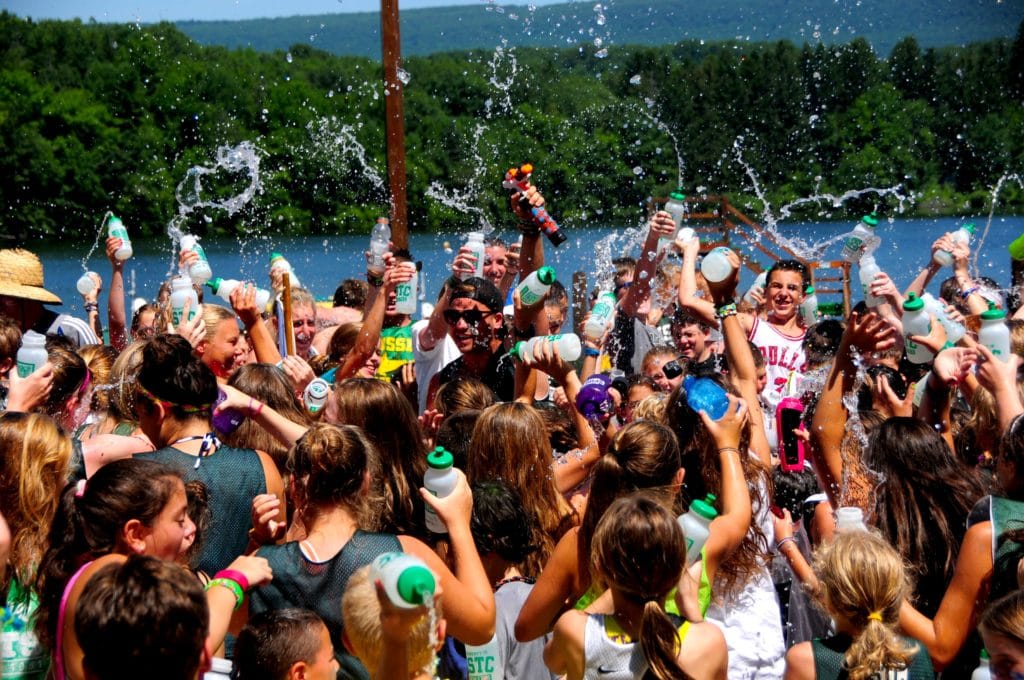
Kids love summer camp because it gives them something everyday life rarely does: days filled with friends, adventure, freedom, traditions, and fun. Campers get to try new activities, become part of a close-knit community, enjoy more independence, and create memories that can make camp feel like a second home.
Adults often talk about summer camp in terms of what children gain from it.
Camp can help kids become more independent. It can build confidence, strengthen social skills, encourage resilience, and give children time away from screens and school-year pressures.
Those benefits matter.
But they are not usually what kids talk about when you ask them why they love summer camp.
Kids remember their cabinmates. They remember jumping in the lake, singing ridiculous songs at dinner, trying waterskiing for the first time, staying up talking with friends, competing in Color War, and laughing at inside jokes that make absolutely no sense outside of camp.
So, why do kids love summer camp so much?
For many campers, it comes down to a combination of friendship, freedom, adventure, tradition, and the feeling of belonging somewhere that is entirely their own.
1. Camp Feels Like a World Built for Kids
There are not many places in everyday life that are designed almost entirely around being a kid.
At summer camp, nearly everything is created with campers in mind.
Their days may include swimming, sports, arts and crafts, ropes courses, theater, boating, games, campfires, and evening activities. Counselors are there to lead activities, encourage campers, and make everyday moments more fun.
Even ordinary parts of the day can feel special.
Breakfast might include a camp song. Walking across camp can turn into a conversation with friends. A rainy afternoon might become a bunk-wide game or an impromptu dance party.
Camp creates an environment where play, exploration, friendship, and adventure are part of the normal routine.
For kids, that can feel pretty magical.
2. They Get to Spend So Much Time With Their Friends
Friendship is one of the biggest reasons kids love summer camp.
During the school year, children may see their friends for a few hours at school, during sports practice, or on an occasional weekend.
At overnight camp, friends experience entire days together.
They wake up in the same cabin, eat meals together, head to activities together, cheer each other on, sit together at campfire, and fall asleep only a few feet apart.
That amount of shared time creates opportunities for friendships to grow quickly.
Campers also meet kids they may never have crossed paths with at home. They might come from different schools, states, countries, or backgrounds, yet become close friends because they are sharing the same experience.
Some campers return year after year largely because they cannot wait to see their camp friends again.
Camp friendship is not only about learning social skills.
For kids, it is about having people to laugh with, explore with, compete with, and make memories with every single day.
3. Every Day Brings Something Different
One reason summer camp is so much fun is simple: there is always something happening.
A camper might start the morning playing tennis, spend the afternoon swimming in the lake, make something in ceramics, and finish the day with a camp-wide scavenger hunt.
The next day could look completely different.
Traditional summer camps often offer a wide range of activities, which means campers can spend the summer exploring interests they already love while also trying things they have never done before.
Depending on the camp, activities might include:
- Swimming
- Waterskiing
- Sailing
- Kayaking
- Basketball
- Soccer
- Tennis
- Archery
- Horseback riding
- Climbing
- Theater
- Dance
- Music
- Photography
- Pottery
- Arts and crafts
- Hiking
- Outdoor adventure
For many kids, the variety is part of the excitement.
Camp makes it possible for something completely new to happen on an otherwise ordinary Tuesday.
Want to see just how much there is to do? Explore our guide to summer camp activities.
4. Kids Get More Freedom and Independence
Parents often think about independence as one of the developmental benefits of camp.
Kids experience it a little differently.
To them, independence feels like freedom.
Depending on their age and the camp, campers may get to choose activities, keep track of their own belongings, decide what to wear, manage parts of their daily routine, and solve small problems without immediately turning to a parent.
Those decisions might seem minor to an adult, but they can feel significant to a child.
Camp gives kids the opportunity to think:
I did that myself.
That sense of ownership can make camp feel uniquely personal.
It is not simply something their parents signed them up for. Over time, it becomes an experience they navigate, shape, and claim as their own.
That independence can also contribute to greater confidence and self-esteem. If you’d like to explore that side of the camp experience further, read our guide to how summer camp builds self-esteem.
5. Camp Is Full of Traditions and Inside Jokes
Every camp develops its own culture.
There may be songs that campers have sung for decades, special meals, campfire traditions, cabin cheers, silly awards, competitions, nicknames, evening programs, and rituals that returning campers look forward to all year.
Many camps also have major traditions such as Color War, Olympics, tribal competitions, banquet nights, or end-of-summer ceremonies.
To an outsider, some of these traditions may seem wonderfully strange.
To campers, they are a big part of what makes camp feel like camp.
Traditions give children a sense that they are part of something bigger than a single summer.
A first-year camper may learn a camp song from an older camper who learned it years earlier. Eventually, that camper may be the one teaching it to someone new.
Inside jokes and traditions also help create a shared identity.
They are part of the reason campers sometimes struggle to explain camp to friends back home.
You almost have to be there.
6. They Get to Try Things They Can’t Always Do at Home
Camp introduces kids to experiences that may be difficult to access during the school year.
A camper might learn to waterski, ride a horse, shoot an arrow, paddle a canoe, climb a rock wall, perform in a musical, sleep under the stars, or make something on a pottery wheel.
Some of those activities may become lifelong interests.
Others may simply become great stories.
Either way, camp gives kids permission to experiment.
They do not have to be experts. They can try something, struggle with it, laugh, try again, and move on to something completely different the next day.
That low-pressure environment can make new experiences much more enjoyable.
And sometimes the best camp memories come from activities a child never expected to like in the first place.
7. Camp Gives Kids a Break From Everyday Pressure
School-year life can be surprisingly structured.
Kids may move from school to homework to sports practice to lessons to family responsibilities, often with phones, notifications, social media, and screens filling the spaces in between.
Camp feels different.
There are no report cards.
There is no homework.
At many overnight camps, phones are limited or not allowed at all.
Instead of worrying about what is happening online, campers spend more of their time actually doing things.
They swim, talk, play games, make things, sit around campfires, and spend refreshing stretches of time outdoors with other kids.
For campers, the appeal may be less about consciously thinking, I’m taking a healthy break from technology, and more about realizing they are too busy having fun to miss it very much.
You can learn more about this benefit in our guide to screen-free summers at camp.
8. Camp Gives Kids a Place Where They Belong
This may be the biggest reason kids love summer camp.
Great camps create strong communities.
Campers are not simply individuals attending activities. They become members of cabins, teams, age groups, and traditions.
Counselors learn their names.
Friends notice when they are missing.
Other campers cheer when they finally get up on waterskis, hit the target in archery, perform on stage, or finish a difficult hike.
Over time, children begin to feel that camp is not simply somewhere they visit.
It is somewhere they belong.
They know the songs.
The dining hall feels familiar.
The trails bring back memories.
Their favorite activity is already on their list.
Familiar counselors and friends are waiting to welcome them.
For those kids, arriving at camp can feel less like entering a new place and more like coming home.
Why Do Kids Want to Go Back to Summer Camp Every Year?
For many campers, returning to camp combines two wonderful feelings: familiarity and anticipation.
They know what they love about camp, but they also know every summer will bring something new.
They may return because they want to see old friends, participate in favorite traditions, try new activities, move into an older cabin, or take on new responsibilities.
As campers grow, their camp experience grows with them.
A child who once needed help finding the dining hall may eventually become one of the older campers helping someone new.
A nervous beginner at an activity may return the next year determined to master it.
Camp gives children a chance to build a personal history.
Each summer becomes another chapter.
That is one reason returning campers can become so attached to their camp communities.
They are not just revisiting a place.
They are returning to friendships, memories, traditions, and a version of themselves that exists there.
What If My Child Isn’t Sure They’ll Like Summer Camp?
Not every child is immediately excited about camp.
Some kids are nervous about sleeping away from home. Others worry about making friends, trying unfamiliar activities, or entering a place where they do not know anyone.
Those concerns are normal, especially for first-time campers.
Parents can help by involving children in the process.
Look at camp photos and videos together. Talk about activities they might want to try. Ask what they are excited about as well as what makes them nervous.
Most importantly, look for a camp that matches your child’s personality and interests.
A child who loves sports may feel most comfortable at a camp with extensive athletic programming. A creative child may be excited by strong arts, theater, or music programs. An adventurous camper might gravitate toward outdoor activities and wilderness trips.
Our guide to summer camp readiness can help you think through that decision.
Finding a Summer Camp Your Child Will Love
There is no single camp that is perfect for every child.
The best fit depends on your child’s age, interests, personality, comfort level, and the kind of experience your family wants.
Some kids thrive at traditional camps with dozens of activity choices.
Others prefer highly focused sports, arts, adventure, or specialty camps.
Some children love a large, energetic camp community. Others may feel more at home in a smaller environment.
The goal is not simply to find a “good” camp.
It is to find a camp where your child can picture themselves having fun.
When that match is right, summer camp can become much more than something to do during school vacation.
It can become the place your child talks about all winter, counts down to all spring, and cannot wait to return to the following summer.
Explore summer camps on American Summer Camps to start finding a program your child could love.
Frequently Asked Questions About Why Kids Love Summer Camp
Kids love summer camp because it combines friendship, freedom, adventure, traditions, and fun. Camp gives children a chance to spend time with friends, try new activities, enjoy more independence, and become part of a community that feels like their own.
Summer camp is fun because every day offers new activities and experiences. Kids may swim, play sports, make art, explore outdoors, attend campfires, compete in games, and spend most of the day surrounded by friends.
Yes. Campers spend large amounts of time together, which can help friendships develop quickly. They share meals, activities, cabins, traditions, and everyday experiences that can create strong connections.
Activities vary by camp but may include swimming, boating, sports, arts and crafts, theater, climbing, horseback riding, archery, hiking, campfires, competitions, and evening programs.
Talk with your child about what concerns them. Involving them in choosing a camp, exploring activities together, and discussing what to expect can help. It is also important to choose a camp that fits their interests, personality, and readiness level.
Returning campers often come back for their friends, favorite traditions, activities, counselors, and sense of belonging. Each year also brings new experiences and opportunities as campers get older.
