

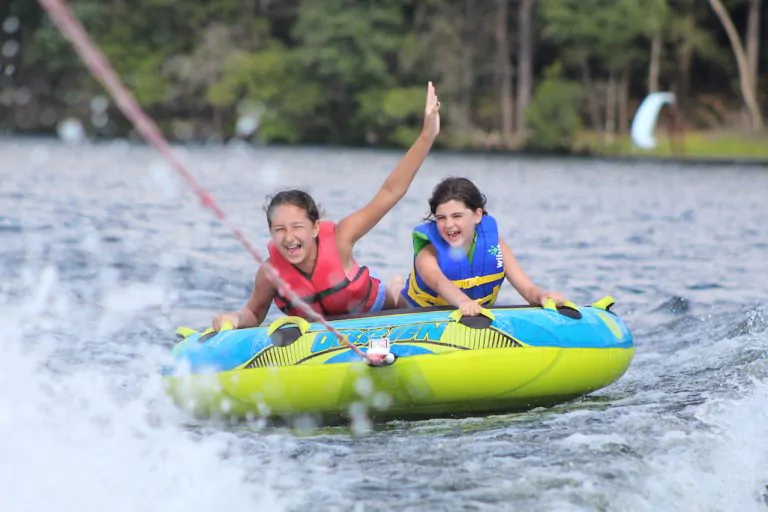
The mental health benefits of summer camp can include stronger friendships, greater confidence, increased independence, more physical activity, time outdoors, reduced digital pressure, and a stronger sense of belonging. Camp is not a replacement for mental health care, but it can provide experiences that support kids’ social and emotional well-being.
Summer camp is known for swimming, sports, campfires, new friends, and plenty of fun. But many of the experiences kids have at camp can also support their mental and emotional well-being.
At camp, children step outside their usual routines. They spend more time interacting face-to-face, moving their bodies, exploring the outdoors, solving problems, and trying things independently.
Those experiences can help children develop confidence, resilience, social skills, and a stronger sense of connection.
In fact, the American Academy of Pediatrics notes that camps and other out-of-school programs can provide opportunities for socialization, emotional regulation, resilience-building, physical activity, and reduced excessive screen time.
So, what exactly are the mental health benefits of summer camp? Here are seven ways a positive camp experience can support a child’s well-being.
How Can Summer Camp Benefit a Child’s Mental Health?
Children’s emotional well-being is influenced by many parts of their lives, including their relationships, physical health, environment, confidence, and sense of belonging.
Summer camp brings many of those elements together.
A child might spend the morning swimming with friends, work through a challenging climbing activity in the afternoon, and end the day laughing with their cabinmates around a campfire. Along the way, they are practicing skills such as communication, problem-solving, independence, teamwork, and emotional regulation.
Harvard Graduate School of Education has highlighted summer camp’s potential for social-emotional learning. Research cited by Harvard found reported growth in areas including self-esteem, independence, leadership, friendship skills, social comfort, and decision-making after children attended camp.
These benefits don’t happen because camp is a treatment program. They happen because a well-run camp gives children repeated opportunities to connect, participate, struggle, succeed, and grow.
1. Camp Gives Kids a Break From Digital Pressure
Phones, social media, games, group chats, and other digital distractions are part of everyday life for many children and teenagers.
At many summer camps, screen use is limited or eliminated during the camp day or session. Instead of communicating primarily through a screen, campers spend much of their time interacting with the people and environment directly around them.
That can create room for kids to focus on what they are doing instead of what is happening online.
A camper might spend an afternoon learning to waterski without stopping to check notifications. During meals, they can talk with friends rather than look at their phones. At night, cabinmates might play games, tell stories, or simply talk.
The American Academy of Pediatrics identifies reduced excessive screen time as one potential benefit of camp and other out-of-school programs.
Camp doesn’t have to teach children that technology is bad. Instead, it can show them that meaningful experiences, entertainment, and friendships can happen without constantly being connected to a device.
2. Camp Builds Face-to-Face Friendships
Friendship is one of the biggest parts of the summer camp experience.
Campers eat together, participate in activities together, solve problems together, and often live together. Those repeated interactions give children plenty of opportunities to practice the skills that go into building healthy relationships.
They learn how to introduce themselves to new people, join a group, communicate, compromise, encourage someone else, work through disagreements, and be part of a community.
The American Psychological Association notes that healthy childhood friendships and peer relationships can help children develop skills that continue to benefit them later in life.
Camp can be especially valuable because children often meet people outside their normal school environment.
A child who feels locked into a particular identity at school—the shy kid, the athletic kid, the new kid, or the kid who doesn’t quite fit in—gets an opportunity to enter a new community where nobody necessarily knows those labels.
That fresh start can make it easier to try new things and form new friendships.
3. Spending Time Outdoors Can Support Well-Being
One of the simplest mental health benefits of summer camp is also one of its most defining features: kids spend a lot of time outside.
Depending on the camp, that could mean hiking through the woods, swimming in a lake, playing soccer on a field, paddling a canoe, eating outside, or simply walking from one activity to another.
Research supports a positive association between children’s contact with nature and several aspects of health.
A systematic review published in Pediatrics examined nearly 300 studies and found particularly strong evidence connecting nature exposure with children’s physical activity and cognitive, behavioral, or mental health. The researchers also cautioned that much of the existing research cannot establish direct causation, so those relationships should not be overstated.
Camp gives children something many families find increasingly difficult to fit into everyday schedules: extended, repeated time outside.
Instead of an occasional trip to the park, outdoor living can become part of a camper’s daily routine.
4. Physical Activity Can Improve Mood and Reduce Stress
At summer camp, kids tend to move—a lot.
They may swim, hike, dance, paddle, play basketball, climb, run, sail, ride horses, play tennis, or participate in dozens of other activities.
Just as importantly, much of that movement doesn’t feel like a workout.
A child racing across a field during capture the flag probably isn’t thinking about getting exercise. They’re thinking about catching the other team.
Regular physical activity is associated with both physical and psychological benefits for children. The American Academy of Pediatrics notes that physical activity can foster psychological well-being, support self-esteem, and help children and adolescents manage stress.
Camp can therefore create an environment where healthy movement is naturally built into the day.
For some kids, it may also help them discover an activity they genuinely enjoy—and may want to continue after summer ends.
5. Camp Helps Kids Build Confidence and Independence
One of the most powerful parts of camp happens when a child realizes:
I can do this myself.
At home, parents understandably handle many of the decisions and challenges children encounter each day. Camp gives kids a safe place to take on more responsibility.
Depending on their age, campers might:
- Choose which activities they want to try.
- Keep track of their own belongings.
- Get themselves ready for the day.
- Ask a counselor for help.
- Introduce themselves to someone new.
- Try an activity that feels intimidating.
- Solve a disagreement with a friend.
- Make decisions without immediately turning to a parent.
None of these accomplishments has to be dramatic.
Confidence often grows from small victories repeated over time.
The first day, a camper might be nervous about jumping into the lake. A few days later, they may be the person encouraging another camper to try.
Camp leaders interviewed by Harvard Graduate School of Education have similarly emphasized the development of qualities such as independence, responsibility, self-advocacy, teamwork, and resilience.
That growing sense of capability can extend well beyond camp.
6. Camp Teaches Resilience Through Manageable Challenges
A great camp experience does not mean every moment is easy.
A camper might lose a tennis match.
They might struggle to climb the wall.
They could miss home.
Maybe their cabin loses Color War by one point. Maybe their best friend chooses a different activity. Maybe learning to water-ski takes 12 attempts instead of two.
Those moments matter.
When children experience manageable challenges in a supportive environment, they have opportunities to practice coping with frustration, disappointment, uncertainty, and discomfort.
Counselors can encourage them and provide help without necessarily solving every problem for them.
Over time, campers begin collecting evidence that difficult moments do not have to ruin the entire experience.
They can struggle with something and keep going.
They can miss home and still have fun.
They can fail at an activity and try again tomorrow.
They can have a disagreement with a friend and repair the relationship.
That is resilience in practice.
7. Camp Creates a Strong Sense of Belonging
Ask former campers what they remember most about camp, and they may name a favorite activity.
But they are just as likely to talk about their cabin, counselors, songs, traditions, inside jokes, campfires, teams, dining hall cheers, or lifelong friends.
Camp communities are often intentionally built around belonging.
Campers may become members of cabin groups, teams, divisions, or camp-wide traditions almost immediately. They participate in shared routines and experiences that give them a place within the larger community.
That feeling of being known and included can be important for emotional well-being.
Recent psychology research has increasingly emphasized the importance of positive childhood experiences, including safe, stable, nurturing relationships and supportive connections, in helping children flourish.
A well-run camp can provide another community where children experience those positive relationships with peers and trusted adults.
Is Summer Camp Good for Kids With Anxiety or Other Mental Health Concerns?
Summer camp can provide supportive experiences for many children, including opportunities for friendship, independence, activity, and confidence-building.
However, summer camp is not a substitute for professional mental health care.
Children also have very different needs. A camp that is a wonderful fit for one child may not have the staffing, structure, or resources another child requires.
If your child experiences anxiety, depression, significant homesickness, behavioral concerns, or another mental health condition, talk openly with prospective camps before enrolling.
Ask how the camp handles emotional concerns, what training staff receive, who campers can speak with when they are struggling, and how the camp communicates with parents.
For more guidance, read our How Do Camps Handle Homesickness or Mental Health? guide.
The Benefits of Camp Can Last Beyond Summer
The best summer camp experiences give kids much more than a fun way to spend June, July, or August.
Children come home with stories, friendships, and memories—but they may also return knowing a little more about themselves.
They know they can meet new people, try something difficult, spend time away from home, contribute to a community, and solve problems.
And they can be more independent than they realized.
Those are valuable lessons at any age.
If you’re considering camp for your child, explore American Summer Camps to discover summer camps throughout the United States and find a program that fits your family’s needs.
Frequently Asked Questions
Yes. Camp gives children repeated opportunities to try unfamiliar activities, make decisions, solve problems, and accomplish things independently. These small successes can help children develop greater confidence in their abilities.
Camp provides frequent opportunities to meet new people, communicate with peers, cooperate in groups, handle disagreements, and build friendships. These everyday experiences can help children practice important social skills.
Yes. Campers often take more responsibility for their schedules, belongings, friendships, and daily decisions than they do at home. Supportive counselors are nearby, but children still have room to practice doing things for themselves.
Outdoor time gives children opportunities for physical activity, exploration, play, and contact with nature. Research has found positive associations between children’s exposure to nature and physical, cognitive, behavioral, and mental health outcomes.
Many camps limit or prohibit personal devices, giving campers an extended break from phones, social media, gaming, and other screens. That creates more time for outdoor activities, face-to-face interaction, and participation in the camp community.
Can summer camp help kids build confidence?
Yes. Camp gives children repeated opportunities to try unfamiliar activities, make decisions, solve problems, and accomplish things independently. These small successes can help children develop greater confidence in their abilities.
Does summer camp help children develop social skills?
Camp provides frequent opportunities to meet new people, communicate with peers, cooperate in groups, handle disagreements, and build friendships. These everyday experiences can help children practice important social skills.
Can summer camp help children become more independent?
Yes. Campers often take more responsibility for their schedules, belongings, friendships, and daily decisions than they do at home. Supportive counselors are nearby, but children still have room to practice doing things for themselves.
Is summer camp good for anxious children?
It can be, but every child is different. Families should consider the child’s individual needs and discuss them with prospective camps. Ask what emotional support, staffing, communication procedures, and accommodations the camp can provide.
How does being outdoors at camp benefit kids?
Outdoor time gives children opportunities for physical activity, exploration, play, and contact with nature. Research has found positive associations between children’s exposure to nature and physical, cognitive, behavioral, and mental health outcomes.
Can summer camp help kids spend less time on screens?
Many camps limit or prohibit personal devices, giving campers an extended break from phones, social media, gaming, and other screens. That creates more time for outdoor activities, face-to-face interaction, and participation in the camp community.
