

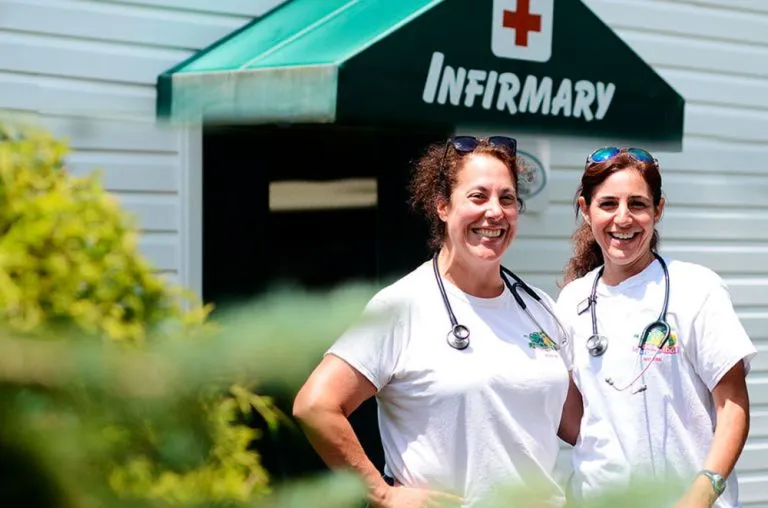
The benefits of being a camp nurse go far beyond treating injuries and illnesses. Camp nurses help children feel safe away from home, support families, strengthen the camp community, and use their healthcare skills in a setting where their impact can be seen every day.
Working as a nurse at summer camp is a unique opportunity to combine healthcare with community, mentorship, and meaningful work.
Of course, camp nurses are responsible for important medical tasks. They help manage medications, respond to injuries, care for sick campers, and support the overall health of the camp community. However, the impact of a camp nurse often reaches much further.
For many campers, especially those spending significant time away from home for the first time, the health center can become a reassuring place. A calm, caring nurse can help turn a stressful moment into one where a child feels understood and supported.
That is one reason the benefits of being a camp nurse can be so meaningful. You are not simply providing healthcare. You are helping create the safe environment that allows children to enjoy everything camp has to offer.
Why Being a Camp Nurse Matters
Summer camp gives children the chance to become more independent, make new friends, try unfamiliar activities, and spend time away from their everyday routines.
Those experiences are exciting, but they can also come with challenges. Campers may get scraped knees, catch a cold, forget to drink enough water, feel homesick, or need help managing an existing medical condition.
Camp nurses are there when those moments happen.
By providing knowledgeable and compassionate care, nurses help campers move through difficult moments and return to the activities they came to camp to enjoy.
In that sense, healthcare is part of what makes the broader camp experience possible.
You Help Campers Feel Safe Away From Home
For some children, summer camp may be their first experience spending several days or weeks away from their parents.
That independence can be incredibly valuable. Still, even confident campers can have moments when they need reassurance.
A child who wakes up feeling sick may suddenly miss home. Another camper might feel nervous about taking medication without a parent nearby. Someone who falls during an activity may be more frightened than injured.
In each situation, a camp nurse can provide both care and reassurance.
Camp nurses have the opportunity to create a welcoming health center where campers know they can ask questions, explain how they are feeling, and receive help when they need it.
Sometimes the biggest difference a nurse makes is simply helping a child realize that everything is going to be okay.
You Give Parents Greater Peace of Mind
Sending a child to sleepaway camp requires trust.
Parents want to know that their child will be surrounded by responsible adults who care about their safety and well-being. Knowing that trained healthcare staff are available can provide an additional layer of confidence.
Camp nurses help monitor campers’ health throughout the summer. They may administer scheduled medications, communicate with families when necessary, document medical care, and work alongside camp leadership to respond to health concerns.
That support helps families feel more comfortable knowing that someone with medical expertise is available if their child becomes sick or injured.
In many cases, nurses also become an important bridge between the camp and a camper’s family when a health concern arises.
You Help Campers Get Back to Camp
One of the most rewarding parts of camp nursing can be seeing campers return to the experiences they were worried they might miss.
A well-treated blister can mean getting back on the hiking trail.
Proper care for a minor injury might allow a camper to return to the soccer field.
Helping someone manage their medication confidently can mean another full day spent swimming, creating art, exploring outdoors, and laughing with friends.
Camp nurses do not simply treat symptoms. Whenever it is safe and appropriate, they help campers get healthy enough to return to camp life.
That can make even routine healthcare feel meaningful.
You may see the impact of your work almost immediately when a camper who arrived at the health center worried or uncomfortable later passes you on the way to an activity, feeling much better.
You Become Part of a Close-Knit Camp Community
Another major benefit of being a camp nurse is the opportunity to become part of the camp community.
Many traditional healthcare settings are fast-paced, and patients may only interact with a nurse for a short period of time. Camp can be different.
At summer camp, nurses often see the same campers and staff throughout the season. That creates opportunities to build relationships and become a familiar, trusted presence.
You might treat a camper one morning and see them performing in a campfire skit that evening. You may help a counselor with an injury and then sit near them at lunch the next day.
Those everyday interactions help camp nurses become part of the community rather than remaining separate from it.
Over the course of a summer, nurses can form friendships with fellow staff members and meaningful connections with the campers they care for.
Camp Nursing Can Remind You Why You Chose Healthcare
Healthcare careers can be demanding. Long shifts, busy environments, and administrative responsibilities can sometimes make it difficult to see the immediate impact of your work.
Camp nursing offers a different perspective.
At camp, you may see the same child later in the day after helping them through a difficult moment. You might receive a wave across the dining hall or hear from a counselor that a camper is feeling much better.
Those small moments can be powerful.
They provide a clear reminder that healthcare is not only about treatment. It is also about helping people feel safe, capable, and cared for.
For nurses who enjoy building relationships with patients, that can make camp especially fulfilling.
You Can Make an Impact Beyond Medical Care
Camp nurses can also influence campers through everyday health education.
Children are constantly learning at camp. They learn how to share cabins, navigate friendships, try new activities, and become more independent. Health habits can become part of that learning process, too.
A camp nurse might encourage campers to:
- Stay properly hydrated
- Use sunscreen consistently
- Practice good hygiene
- Recognize when they need rest
- Take medications responsibly
- Speak up when something does not feel right
- Ask an adult for help when necessary
These lessons may seem small, but they contribute to greater independence and self-awareness.
For younger campers in particular, learning how to talk about their health and advocate for themselves can be an important part of growing up.
The Camp Nurse Experience Can Impact You, Too
The impact of camp nursing is not limited to campers.
Working in a camp environment can also challenge nurses to grow personally and professionally.
Camp healthcare teams often work with a wide range of minor illnesses, injuries, medications, and everyday health concerns. Nurses may need to think independently, communicate clearly, and adapt to situations that look different from those they encounter in hospitals, clinics, or other traditional healthcare settings.
At the same time, camp offers something many workplaces cannot: an immersive community.
Depending on the camp, nurses may spend their free time outdoors, participate in camp traditions, attend evening activities, and build friendships with staff members from around the country or world.
It can feel less like simply reporting to another workplace and more like becoming part of a community for the summer.
For some nurses, that change of pace is exactly what makes the experience memorable.
Is Becoming a Camp Nurse Right for You?
Camp nursing is different from many other nursing positions, so it will not appeal to everyone.
However, it may be worth considering if you:
- Enjoy working with children and young adults
- Like building relationships with the people you care for
- Are comfortable working in a community-based environment
- Want a change from a hospital or clinic setting
- Enjoy spending time outdoors
- Want your nursing skills to contribute directly to a child’s summer experience
Camp nursing can also appeal to healthcare professionals looking for seasonal work or a new way to use their skills.
If you want to learn more about responsibilities, qualifications, and available opportunities, explore our guide to working as a summer camp nurse.
Make a Difference as a Summer Camp Nurse
Every camper deserves to feel safe, supported, and cared for while they are away from home.
Camp nurses help make that possible.
Your healthcare skills can give a homesick camper reassurance, help an injured child return to an activity they love, give parents greater peace of mind, and support an entire camp community throughout the summer.
At the same time, you may discover a new side of nursing and a summer experience that has a lasting impact on you, too.
If you are looking for meaningful seasonal healthcare work, explore summer camp nurse opportunities with American Summer Camps and find a camp where your skills can make a difference.
Frequently Asked Questions About Being a Camp Nurse
Camp nurses help protect the health and well-being of campers and staff. They provide medical care, manage medications, respond to illnesses and injuries, and help children feel supported while they are away from home.
A camp nurse can help campers feel safe during stressful moments and return to activities after minor illnesses or injuries. Nurses can also teach healthy habits and help children become more confident about managing their own health.
The benefits of being a camp nurse include meaningful work, close relationships with campers and staff, exposure to a unique healthcare environment, and the opportunity to see the impact of your care throughout the summer.
Yes, many nurses find camp nursing rewarding because they can build relationships with the people they care for and see how their work contributes to the overall camp experience. It can also provide a refreshing change from more traditional healthcare settings.
Opportunities vary by camp and by position. Some camps hire nursing students for health-center support roles, while licensed nursing positions generally have specific credential requirements. Nursing students can explore summer jobs for nursing students to learn more about potential opportunities.
Camp nurses may encounter campers whose physical discomfort is connected with homesickness or anxiety. By listening, providing reassurance, addressing medical concerns, and working with counselors or camp leadership when appropriate, nurses can help campers feel more comfortable and confident away from home.
