

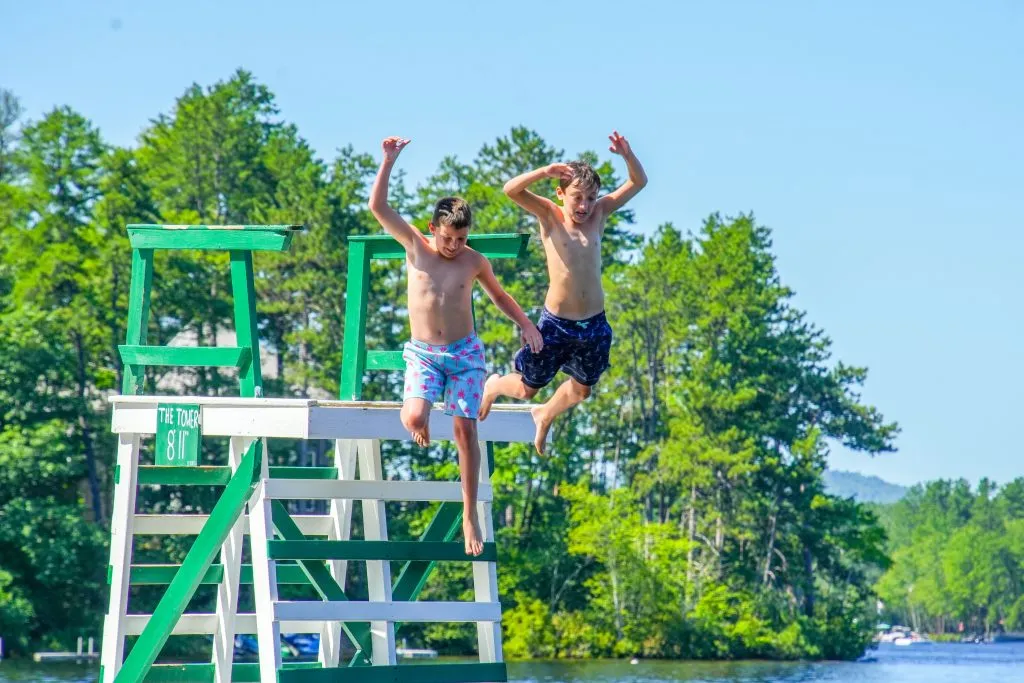
What do kids learn at summer camp? Camp helps children build independence, confidence, resilience, communication skills, friendships, teamwork, and decision-making. Research highlighted by the Harvard Graduate School of Education shows that camp can be an especially valuable environment for social-emotional learning because children practice these skills naturally every day.
Summer camp may feel like a break from learning, but that doesn’t mean kids stop learning altogether.
In fact, some of the most important lessons children take away from camp have nothing to do with textbooks, tests, or homework.
At camp, kids learn how to make new friends, solve problems, try unfamiliar activities, live more independently, and work as part of a group. They practice making decisions without immediately turning to a parent and discover what they are capable of when something feels difficult.
And much of that learning happens without campers even realizing it.
The Harvard Graduate School of Education has highlighted summer camp as an important setting for social-emotional learning. The everyday experiences that make camp special—being away from home, meeting new people, joining a community, and trying new things—also give children repeated opportunities to develop skills that can benefit them long after summer ends.
What Do Kids Learn at Summer Camp?
Kids can learn independence, confidence, communication, teamwork, resilience, problem-solving, friendship skills, responsibility, and decision-making at summer camp.
Unlike a classroom lesson, these skills are usually developed through experience.
A camper doesn’t sit down for a lesson on resilience. Instead, they try the climbing wall again after not making it to the top.
They don’t study a chapter on communication. They figure out how to live with cabinmates, join a new group, and work through disagreements.
Those everyday moments are what make camp such a unique learning environment.
Here are seven of the biggest lessons kids can take home from summer camp.
1. How to Be More Independent
For many children, sleepaway camp is one of their first opportunities to spend an extended period away from their parents.
That means campers start handling more of everyday life themselves.
They may need to keep track of their belongings, get ready for activities, follow a daily schedule, remember what they need for the waterfront, and decide when it’s time to ask a counselor for help.
They also begin solving small problems without immediately calling home.
According to Harvard’s overview of social-emotional learning at camp, limited contact with parents gives children opportunities to manage everyday challenges on their own, from disagreements with bunkmates to disappointment about activities.
Counselors are still there to support them. The difference is that kids are given enough space to begin figuring things out for themselves.
Over the course of a camp session, all of those little moments can add up to a much greater sense of independence.
2. How to Make Friends and Build Relationships
Going to camp often means walking into a community full of people you have never met.
That can feel intimidating at first.
It can also be one of the most valuable parts of the experience.
Campers learn how to introduce themselves, join conversations, share living spaces, compromise, cooperate, and get to know people who may be very different from the friends they have at home.
Camp also gives kids plenty of time to practice those skills.
At many overnight camps, phones and other personal electronics are limited or completely put away. Instead of communicating through texts, group chats, or social media, campers spend their days interacting face-to-face.
Harvard notes that these technology-free environments can help children learn to navigate social cues and build friendships in person.
Cabin activities, meals, sports, evening programs, and free time all become opportunities to learn how relationships work.
And because most campers arrive without their established school friend groups, camp can give kids the freedom to make entirely new connections.
3. How to Try Something New
Summer camp is filled with activities kids might never encounter at home.
One day could include archery or ceramics. The next might bring sailing, waterskiing, theater, horseback riding, climbing, or a completely ridiculous camp game that nobody has played before.
Trying unfamiliar activities teaches an important lesson:
You don’t have to know you’ll be good at something before you try it.
In its article on lessons from camp, Harvard points out that camps often introduce activities that are new to everyone. When no one starts out as the expert, children may feel more comfortable participating and taking a risk.
That’s an important change for kids who are used to comparing themselves to classmates or teammates.
A camper doesn’t have to be “the athletic kid” to try waterskiing.
They don’t have to be “the artistic kid” to sign up for ceramics.
They simply get to try.
Sometimes they’ll discover a new passion. Sometimes they’ll discover that an activity isn’t for them.
Both are valuable lessons.
4. How to Handle Challenges and Disappointment
Not every moment at summer camp is easy.
A camper might miss home.
They might lose an important game, struggle with a new activity, argue with a cabinmate, or not get their first-choice elective.
Those moments can actually be an important part of the camp experience.
Camp gives kids opportunities to experience manageable challenges while supportive adults are nearby.
Instead of removing every obstacle, counselors can help campers work through it.
Maybe a child doesn’t make it to the top of the climbing wall on the first attempt. They try again tomorrow.
Maybe they feel nervous during the first few nights away from home. A few days later, they’re fully immersed in camp.
Maybe it takes five attempts to stand up on waterskis.
Eventually, they do.
These experiences teach children that feeling uncomfortable, frustrated, or disappointed doesn’t mean something has gone wrong.
Sometimes it’s simply part of learning.
5. How to Be Part of a Team
Camp communities depend on cooperation.
Campers aren’t only responsible for themselves. They’re also members of cabins, teams, activity groups, age divisions, and the larger camp community.
That means learning how to contribute.
A camper might help clean the cabin before breakfast, encourage a teammate during a game, work with friends to create a skit, or cheer for another camper trying something difficult.
Sports and competitions provide obvious opportunities for teamwork, but the lesson reaches far beyond athletics.
Campers learn how to share responsibility, include other people, compromise, and sometimes put the needs of a group ahead of what they personally want.
Counselors play an important role here, too.
Harvard notes that many camps intentionally train staff members to model positive friendship, cooperation, and sportsmanship. Because counselors are often young adults whom campers admire, they can become especially influential examples of how to treat other people.
6. How to Make Decisions and Take Responsibility
Campers make dozens of small decisions every day.
Should I try that activity?
How should I respond when my friend frustrates me?
Do I give up or keep practicing?
Should I ask my counselor for help?
How can I contribute to my cabin?
These might seem like minor choices, but together they provide valuable practice in decision-making.
Responsible decision-making is one of the five major areas commonly associated with social-emotional learning, alongside self-awareness, self-management, social awareness, and relationship skills.
Camp gives children plenty of opportunities to practice all five.
And because many camp decisions are relatively low-stakes, kids have room to experiment, make mistakes, and learn from the results.
That’s a valuable step toward becoming more responsible both at camp and at home.
7. How to Learn More About Themselves
One of the most important things kids can discover at camp is simply who they are.
Away from their usual routines, kids get to see themselves in new situations.
A camper who struggles academically might discover they’re a natural leader on the ropes course.
A child who has never considered themselves athletic might fall in love with tennis.
A quiet camper might discover that they’re great at welcoming new people into a group.
Someone who was nervous about leaving home might realize that they’re much more independent than they thought.
Harvard also points to reflection as an important part of many camp programs. Some camps intentionally create opportunities for campers to think about what they’ve accomplished, challenges they’ve overcome, and goals they want to pursue.
That kind of reflection can help children recognize their own growth.
Why Is Summer Camp So Good for Social-Emotional Learning?
Social-emotional learning describes the skills children use to understand themselves, manage emotions, build relationships, make decisions, and interact successfully with other people.
Camp naturally creates opportunities to practice those skills all day long.
Think about the environment:
Kids are surrounded by new peers.
They’re spending time away from their parents.
They’re trying unfamiliar activities.
They’re living as part of a community.
They’re interacting face-to-face.
They’re working through challenges.
And they’re supported by counselors who can encourage them without solving every problem for them.
That combination is difficult to recreate in everyday life.
The Harvard Graduate School of Education also highlights research from the American Camp Association involving 80 camps. Parents, campers, and staff reported growth over the course of camp in areas including self-esteem, independence, leadership, friendship skills, social comfort, and decision-making.
Do Kids Know They’re Learning These Skills?
Usually, probably not.
And that’s part of what makes camp special.
A camper isn’t standing at the bottom of the climbing wall thinking:
“Today I’m going to practice self-management, perseverance, and responsible decision-making.”
They’re thinking:
“I want to get to the top.”
But reaching that goal might require them to manage frustration, listen to their instructor, try a different strategy, and keep going when something feels difficult.
The same thing happens throughout camp.
A silly cabin game can teach teamwork.
A disagreement can teach communication.
Missing home can lead to greater independence.
A new friendship can build confidence.
Much of the learning at summer camp happens while kids are simply having fun.
The Lessons From Camp Don’t End When Summer Does
Eventually, the duffel bags are packed, the friendship bracelets come home, and another summer at camp comes to an end.
But the experience doesn’t necessarily stay at camp.
Children return home having practiced solving their own problems, making friends, communicating face-to-face, taking responsibility, trying unfamiliar things, and navigating life without their parents managing every decision.
Those skills can carry into school, sports, friendships, family life, and eventually adulthood.
That’s part of what makes summer camp so much more than a fun way to spend a few weeks.
Kids go to camp to swim, play, laugh, explore, and make friends.
Along the way, they may also discover just how much they’re capable of.
Frequently Asked Questions
Kids can develop independence, communication, teamwork, resilience, problem-solving, responsibility, decision-making, and friendship skills through everyday camp experiences.
Yes. Camp gives children opportunities to manage routines, make choices, solve everyday problems, and spend time away from their parents while supported by trained camp staff.
Camp gives kids extensive face-to-face interaction with peers. They practice communication, cooperation, conflict resolution, empathy, teamwork, and the skills involved in making and maintaining friendships.
Trying unfamiliar activities, achieving goals, making new friends, and successfully navigating time away from home can all help children become more confident in their abilities.
Social-emotional learning includes skills such as self-awareness, self-management, social awareness, relationship-building, and responsible decision-making. Campers can practice these skills naturally through everyday camp experiences.
Many skills practiced at camp, including persistence, communication, teamwork, independence, and problem-solving, can also help children navigate relationships, responsibilities, and challenges during the school year.
